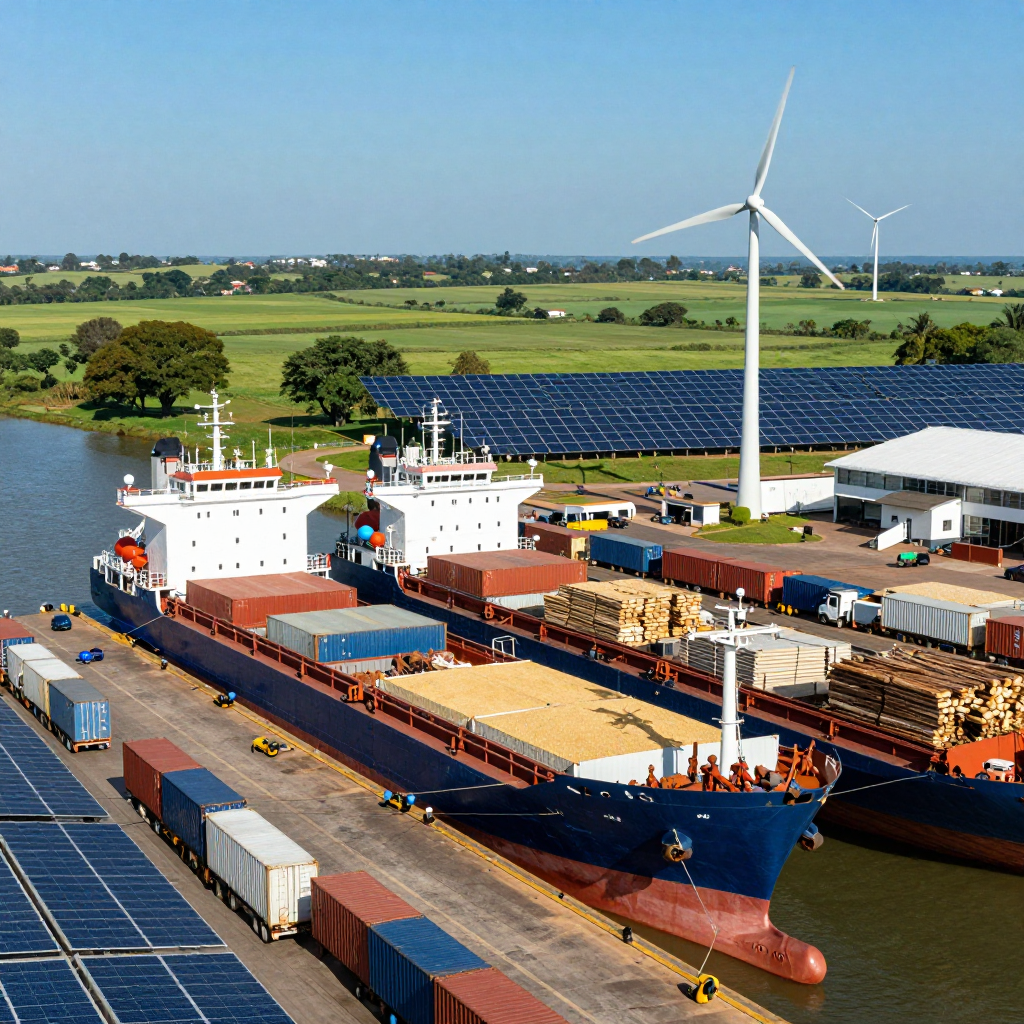
Asunción, Paraguay — Paraguay's economic trajectory appears increasingly positive as the nation experiences steady growth across key sectors. Driven by favorable agricultural conditions and rising global demand for soybeans, cattle, and timber, Paraguay's GDP growth rate has outpaced regional expectations over the past year. The Central Bank of Paraguay estimates that 2023 could see GDP expansion of approximately 4%, largely supported by strong performance in agriculture, which accounts for around 20% of the country’s GDP and employs nearly half of the workforce.
Trade continues to play a pivotal role in Paraguay's economic landscape, withMercosur remaining a crucial partner. As one of the founding members of the Southern Common Market, Paraguay has benefited from tariff-free access to a market of over 290 million consumers. Recent data from the Paraguayan Ministry of Industry and Commerce indicates a 7% increase in exports to Mercosur countries in the first quarter of 2023, signaling enhanced integration. However, challenges remain, including infrastructural limitations that hinder efficient cross-border trade and logistical bottlenecks within the region.
In terms of investment, Paraguay has been attracting significant interest from foreign investors, particularly in the renewable energy and agribusiness sectors. The government’s push for energy diversification has led to substantial investment in hydropower projects and solar energy initiatives. These investments have not only bolstered the national grid but also attracted multinational corporations looking to capitalize on Paraguay's abundant natural resources and strategic position within South America. Analysts note that while these projects offer long-term growth potential, they also require sustained policy support to ensure sustainability and equitable development.
From a political standpoint, Paraguay's commitment to regional collaboration within Mercosur is evident, with President Mario Abdo Benítez frequently emphasizing the importance of strengthening ties with neighboring countries. This alignment with regional goals is crucial as Mercosur undergoes reform discussions aimed at modernizing trade protocols and expanding the bloc's influence globally. Paraguay's participation in these reforms could further enhance its economic standing and attract additional investment streams.
Despite these positive signs, experts warn that Paraguay must address structural issues such as corruption, regulatory hurdles, and labor market inefficiencies to fully realize its economic potential. Addressing these challenges will be critical as the country seeks to deepen its integration within Mercosur and position itself as a more attractive destination for international businesses. In the coming months, continued dialogue between policymakers, businesses, and civil society will be essential to navigate the complexities of Paraguay's evolving economic landscape and secure sustainable growth.