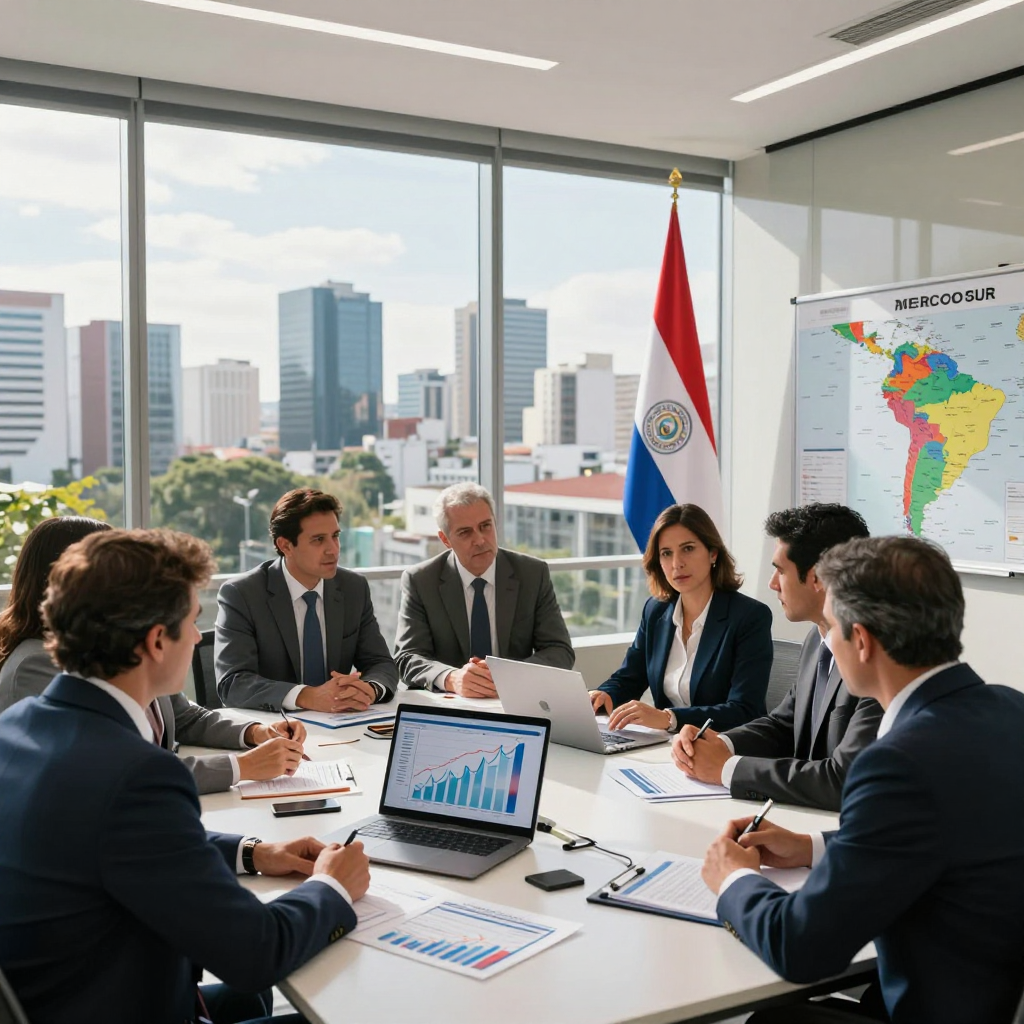
ASUNCION – Paraguay’s economy continues to navigate a delicate balance between its internal structural challenges and the benefits derived from its membership in the Mercado Común del Sur (Mercosur). Recent developments suggest that the country is poised to capitalize on its strategic position within the trading bloc, leading to increased optimism among international investors.
Economic indicators in the first quarter of 2023 have shown moderate growth, driven largely by improvements in agricultural exports and increased industrial activity. According to data from the Central Bank of Paraguay, GDP growth reached 3.6% year-on-year, marking a slight recovery from the subdued performance observed in previous quarters. This uptick is attributed to both domestic demand and rising external trade, particularly within the Mercosur framework.
One of the primary drivers behind this resurgence is the strengthening of trade agreements within Mercosur. Paraguay, alongside its fellow members Argentina, Brazil, Uruguay, and Venezuela (as a suspension member), has seen enhanced market access for key agricultural products such as soybeans, corn, and cattle. These commodities are central to Paraguay's export portfolio, accounting for over 70% of total exports. The reduction of tariffs and harmonized standards under Mercosur rules have allowed Paraguay to increase its competitiveness within the regional market.
Foreign direct investment (FDI) into Paraguay also appears to be on the rise, with several multinational corporations exploring opportunities in infrastructure, energy, and agribusiness sectors. Government initiatives aimed at improving the business environment, including simplified regulatory processes and incentives for renewable energy projects, have attracted attention from international firms. Notably, recent investments in solar energy projects signal a shift toward sustainable development, aligning with global trends and potentially positioning Paraguay as a green energy hub within Mercosur.
However, analysts caution that while the short-term outlook is positive, sustained growth will require addressing structural issues such as low productivity, limited diversification of the economy, and infrastructure deficiencies. The country’s reliance on commodity exports leaves it vulnerable to global price fluctuations, a challenge that could be mitigated through diversification efforts. Additionally, bureaucratic hurdles and property rights concerns remain barriers to attracting larger-scale investments.
From a regional perspective, Paraguay's relationship with Mercosur is vital for its economic trajectory. As Mercosur explores deeper integration with other trading blocs, including potential free-trade agreements with the European Union and others, Paraguay stands to benefit from expanded market access. However, the success of these negotiations depends largely on the bloc’s ability to resolve disputes, most notably the continuing impasse over Venezuela's status as a member.
In conclusion, Paraguay's economic prospects are increasingly tied to its role within Mercosur. While the country is experiencing modest gains, sustained growth will depend on its ability to implement meaningful reforms, attract diverse investments, and leverage its strategic position within the regional trading bloc. As international business readers look toward Paraguay, the focus remains on whether the government can effectively navigate these challenges and capitalize on emerging opportunities.