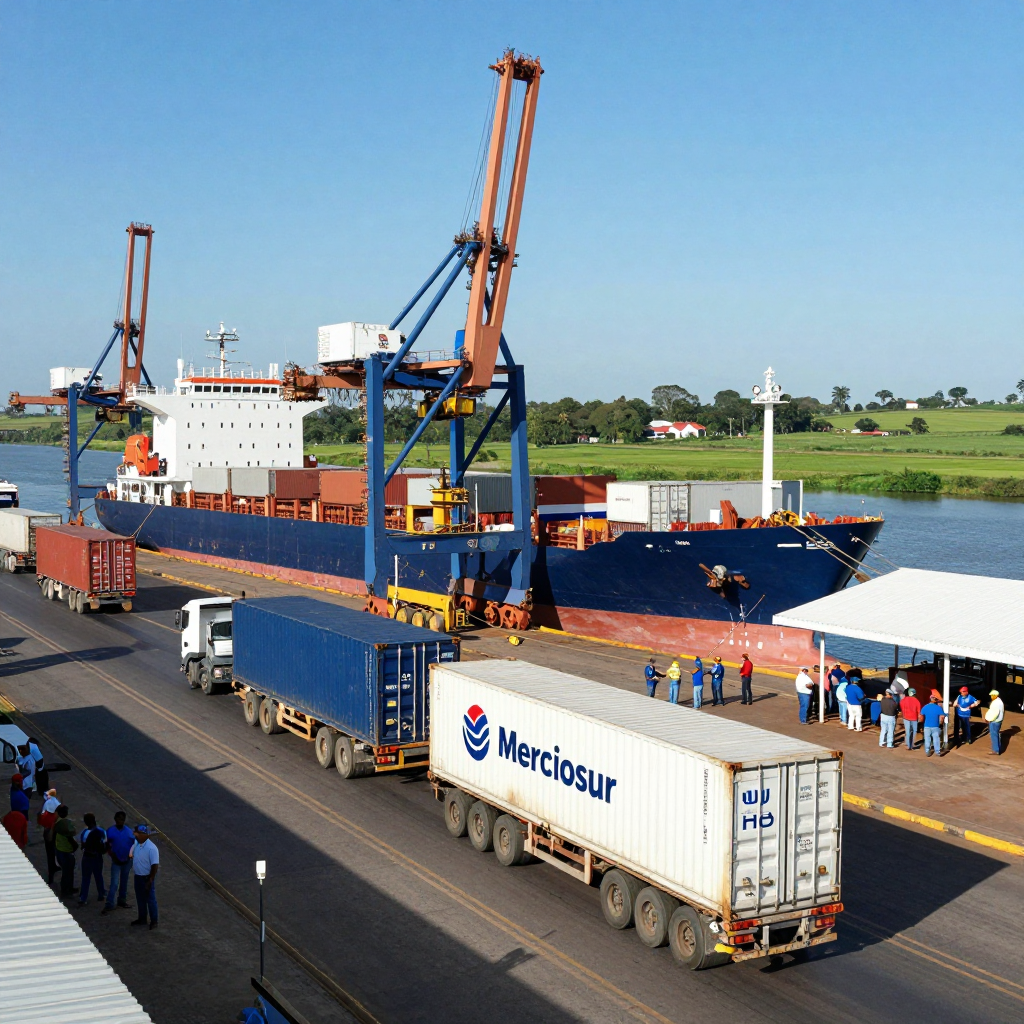
Asunción, Paraguay – Paraguay's economy is experiencing a notable improvement, largely attributed to its integration into the Mercado Común del Sur (Mercosur) and growing trade linkages with key partners. Amid a global economic slowdown, Paraguay has emerged as a stable market within South America, attracting significant foreign direct investment (FDI). This growth trajectory is not only benefiting local businesses but also positioning the country as a vital player in regional trade dynamics.
Economic Indicators Paint Positive Picture Recent data from the Central Bank of Paraguay indicates that GDP growth could reach 4% in 2023, supported by robust agricultural exports and industrial sector expansion. The services sector, particularly logistics and transportation, has seen substantial investment, driven by Paraguay's role as a transit hub between Mercosur members and the Pacific Ocean. Analysts suggest that this strategic location is becoming increasingly valuable as Mercosur looks to expand trade agreements beyond traditional markets.
Mercosur Integration Drives Trade Opportunities In March 2023, Mercosur signed a historic trade agreement with the European Union, presenting Paraguay with new avenues for export diversification. The deal is expected to enhance access to high-value markets, especially for Paraguay’s agro-industrial products such as soybeans, beef, and timber. "Paraguay is well-positioned to capitalize on these deals given its low production costs and strong export orientation," said Maria Lopez, an economist at the University of Asunción. "The challenge will be ensuring domestic industries can scale up quickly enough to meet demand."
Foreign Direct Investment Continues to Flow In addition to regional trade gains, Paraguay has witnessed a surge in FDI, particularly in energy, mining, and infrastructure sectors. Companies from Brazil, Argentina, and even further afield have expressed interest in leveraging Paraguay’s natural resources and favorable tax incentives. "Paraguay’s political stability and pro-business policies have attracted significant attention from investors," noted Juan Gonzalez, head of the National Investment Promotion Agency. "We are working closely with both domestic and international stakeholders to streamline regulatory processes and encourage long-term commitments."
Challenges Remain on the Horizon Despite these positive developments, analysts caution that Paraguay must address structural issues to sustain its growth trajectory. Improving infrastructure, formalizing labor markets, and enhancing educational systems are identified as critical priorities. Furthermore, the country's reliance on primary commodity exports makes it vulnerable to fluctuations in global commodity prices. "While Paraguay is clearly benefiting from regional cooperation, it needs to diversify its economic base to ensure resilience against external shocks," added Lopez.
Overall, Paraguay’s economic landscape presents a compelling story of promise and potential. As Mercosur continues to evolve and expand its influence, Paraguay finds itself at a pivotal moment, poised to play a more significant role in shaping the region’s economic future.