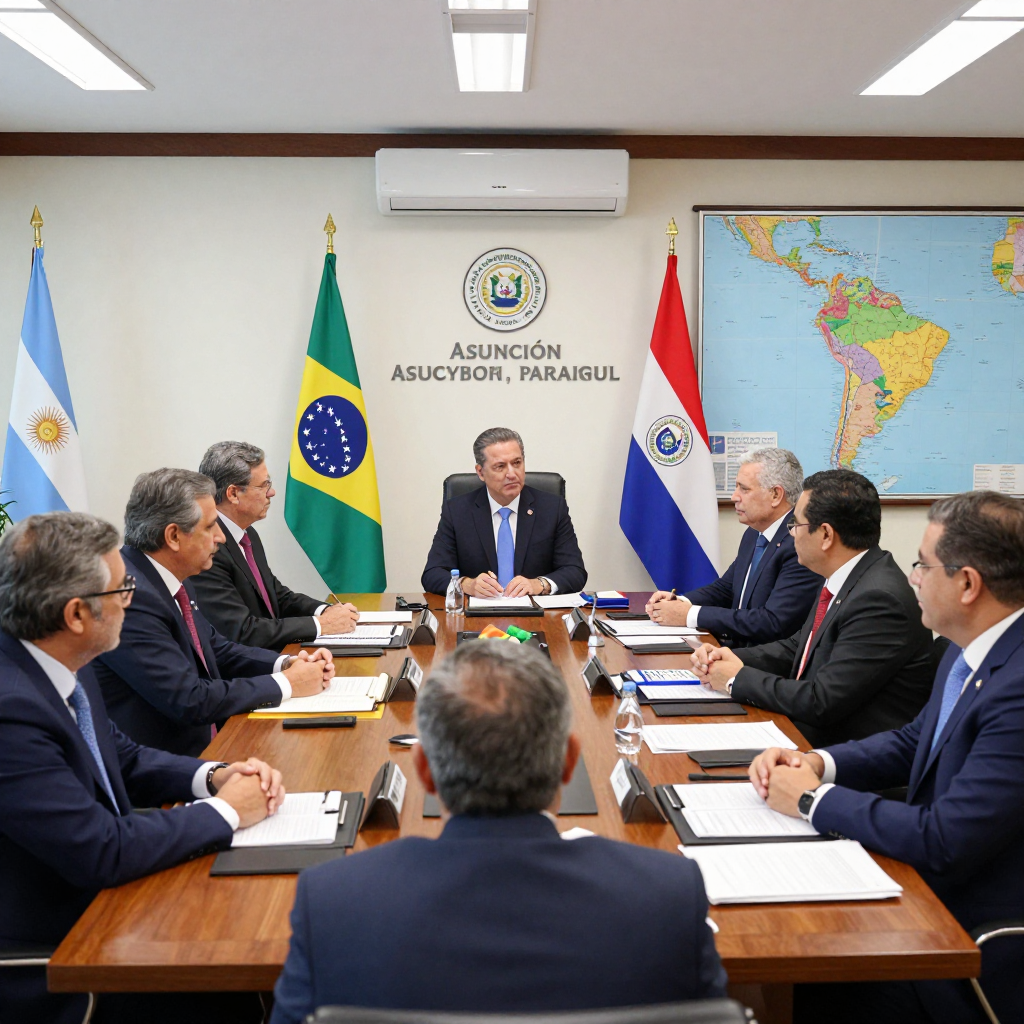
Asunción, Paraguay — In a move reflecting the country's strategic priorities, the Paraguayan government has recently emphasized its commitment to deepening economic cooperation within the Mercosur trade bloc. This renewed focus comes amid broader policy shifts that aim to enhance Paraguay's role as a key player in South America's economic landscape, while also addressing domestic economic challenges such as inflation and foreign investment attraction.
Government officials have highlighted the importance of strengthening bilateral trade agreements with neighboring Mercosur countries—Argentina, Brazil, Uruguay, and Venezuela—to foster greater market access and attract foreign direct investment (FDI). Analysts suggest that these efforts could lead to increased opportunities for multinational corporations looking to expand into Paraguay and the larger Mercosur market. However, they caution that structural reforms and improved regulatory frameworks will be critical in ensuring these policies translate into tangible economic benefits.
In a recent address to Congress, President Mario Abdo Benítez underscored the need for Paraguay to leverage its geographical position and low-cost labor force to become a production hub within Mercosur. The administration is reportedly exploring incentives for sectors such as agribusiness, manufacturing, and renewable energy, industries that analysts say offer significant potential for growth and job creation. These measures could help offset the traditional reliance on soybean exports, which constitute a substantial portion of Paraguay's GDP but are subject to global commodity price volatility.
While the proposed strategies appear promising, challenges remain. Key among them is Paraguay's need to improve infrastructure, particularly transportation networks, to facilitate trade and logistics. Additionally, concerns over political stability and corruption have persisted, raising questions about investor confidence despite recent policy strides. Observers note that successfully navigating these issues will be essential to realizing the full potential of Paraguay's economic vision.
The government's push for closer integration aligns with broader regional dynamics, where Mercosur member states are increasingly seeking ways to counteract the economic impacts of geopolitical tensions and global trade disruptions. As Paraguay positions itself as a more attractive destination for business, it can expect both opportunities and competition from within the bloc. Ultimately, the success of these initiatives will hinge on the government’s ability to implement reforms effectively and maintain a stable business environment conducive to long-term investment.