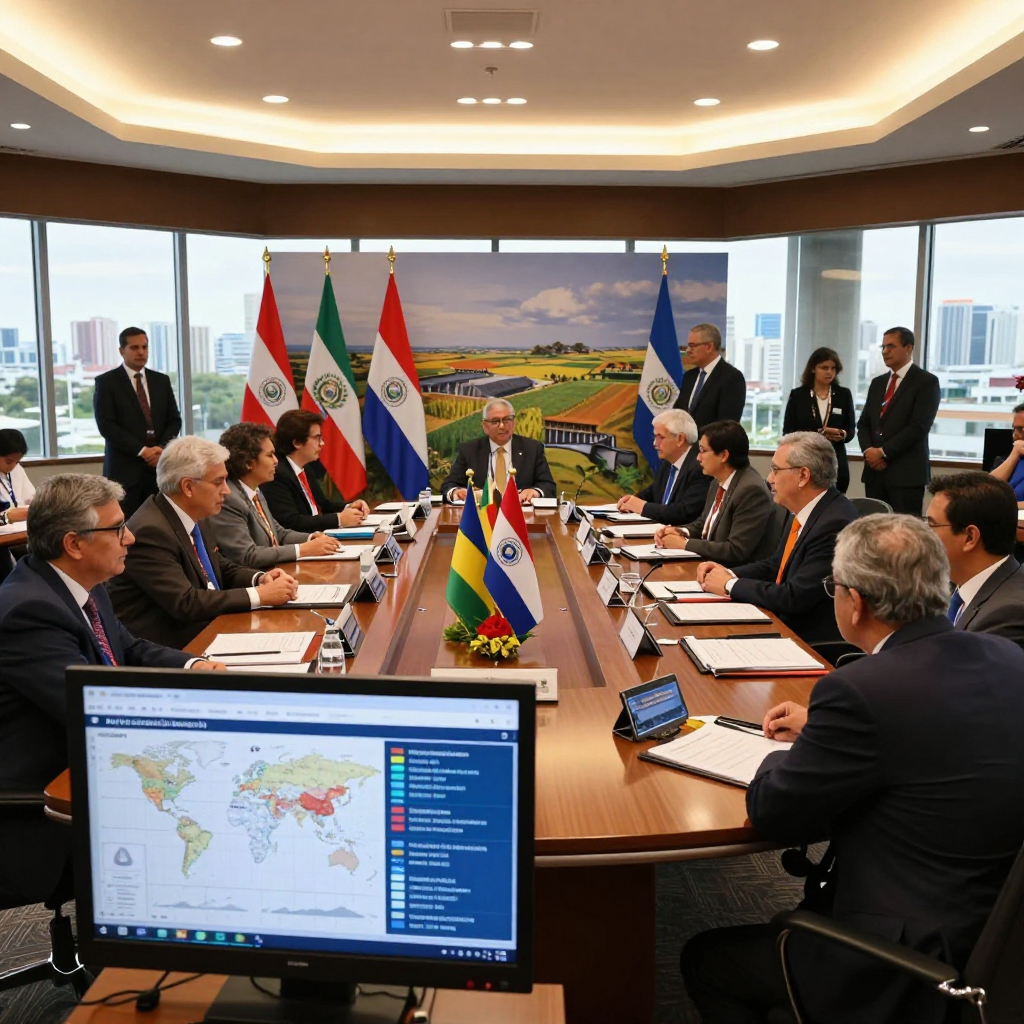
Asunción, Paraguay — In recent months, Paraguay has been actively pursuing stronger trade relationships with key Asian economies, including China and South Korea, amid ongoing discussions within Mercosur about expanding its global footprint. These initiatives reflect Paraguay’s strategic aim to enhance its economic resilience by reducing dependence on traditional trading partners within the Southern Common Market (Mercosul).
According to analysts, Paraguay’s growing interest in Asian markets stems from a desire to tap into untapped export potential, particularly in sectors such as agriculture and hydroelectric energy. China remains a significant market for Paraguayan soybean exports, whileSouth Korea presents opportunities in automotive parts and electric vehicles, given its robust manufacturing sector. This pursuit of enhanced bilateral agreements could also serve to attract foreign direct investment (FDI) into Paraguay, boosting infrastructure development and job creation.
The shift comes at a time when Mercosur, as a bloc, is exploring broader global trade partnerships. Recent talks with the European Union over a free trade agreement have highlighted the region’s ambitions to integrate more deeply into the global economy. However, internal challenges within Mercosur, such as varying economic priorities among member states and differing levels of economic development, have sometimes slowed progress. This has led some countries, including Paraguay, to seek independent trade deals to complement Mercosur’s efforts.
From a political standpoint, strengthening ties with Asian nations aligns with Paraguay’s historical emphasis on maintaining strong diplomatic relations across multiple continents. By diversifying its trade portfolio, Paraguay hopes to insulate itself from potential disruptions in Mercosur, such as fluctuations in Brazil’s and Argentina’s economies, which significantly influence the bloc’s dynamics. This strategy could also position Paraguay as a more attractive transit hub for goods moving between South America and Asia via ports along the Atlantic Ocean.
Economic experts in Asunción argue that these moves should not overshadow Paraguay’s commitment to Mercosur but rather complement it. ‘We see this as a complementary approach,’ said a spokesperson from the Paraguayan Ministry of Foreign Affairs. ‘While we believe in the strength of Mercosur, diversifying our trade networks helps us build a more robust and sustainable economy.’
In the realm of business implications, Paraguay’s outreach to Asian markets could lead to increased investment in logistics and transportation infrastructure, essential for facilitating the flow of goods between continents. This, in turn, may stimulate growth in related sectors such as warehousing, distribution, and technology, spurring innovation and modernization.
However, challenges remain. Analysts point out that Paraguay will need to address logistical bottlenecks, improve regulatory frameworks, and ensure transparency in its governance to fully capitalize on these opportunities. Additionally, navigating complex geopolitical dynamics, especially with respect to trade tensions between major powers, will require careful diplomacy and negotiation skills.
Overall, as Paraguay continues to engage with Asian markets, it underscores the country’s evolving role in the global trade landscape. By leveraging both regional integration and international partnerships, Paraguay aims to position itself as a competitive player in the 21st-century economy, ready to adapt to changing global dynamics while securing its long-term prosperity.