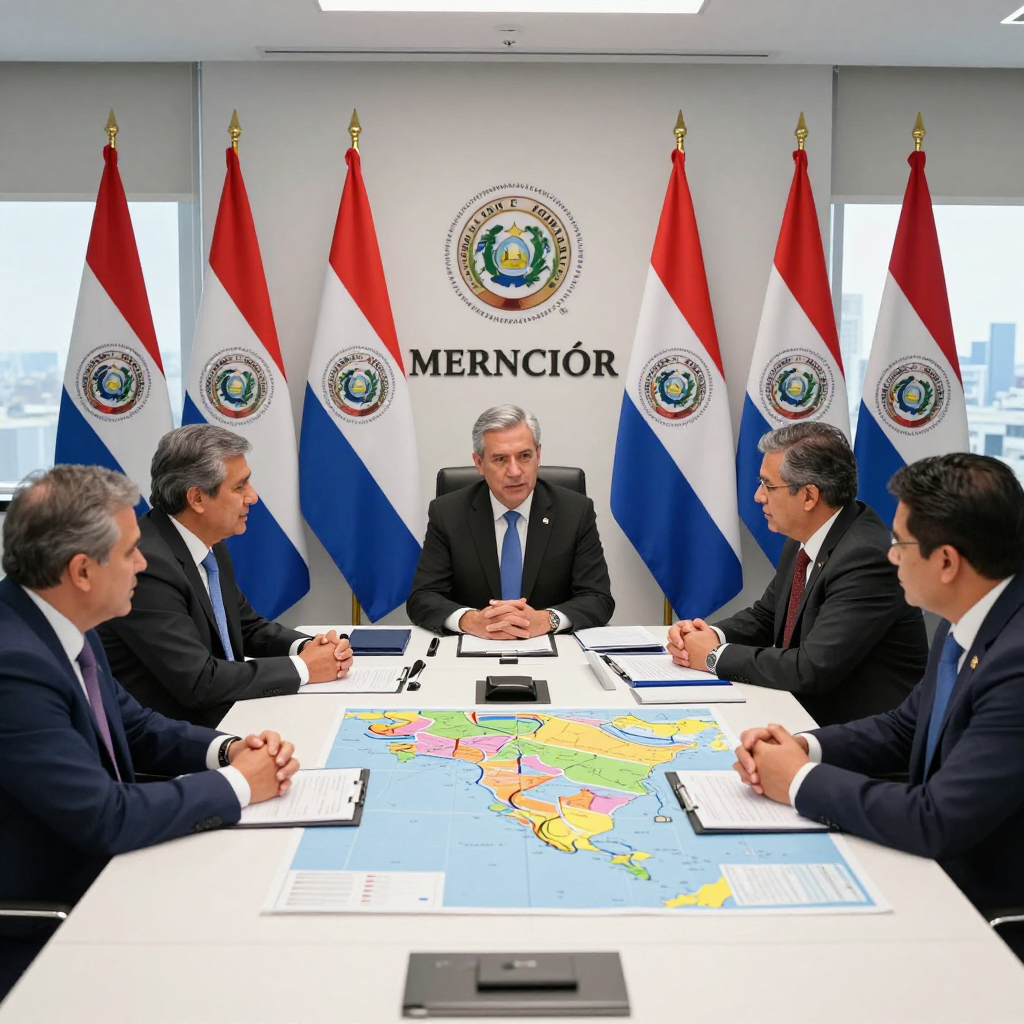
Asunción, Paraguay – Amidst ongoing global economic uncertainties, Paraguay is positioning itself as a key player in regional trade dynamics, leveraging its strategic location within Mercosur and the broader Southern Cone. Recent developments indicate a concerted effort by the Paraguayan government to attract foreign investment while deepening trade ties with both Mercosur partners and beyond.
Institutional reforms and policy adjustments have been central to Paraguay’s economic strategy. The government has introduced measures to streamline regulatory processes, aiming to make the business environment more attractive to international investors. These efforts reflect a commitment to addressing longstanding challenges such as bureaucratic obstacles and a sometimes unpredictable legal framework, which have historically deterred foreign direct investment (FDI).
Trade within Mercosur remains a focal point for Paraguay's economic ambitions. As a member of the bloc, the country benefits from preferential access to markets in Brazil, Argentina, Uruguay, and Venezuela (an observer state). However, Paraguay also seeks to diversify its trade relationships, engaging with non-Mercosur countries through bilateral agreements and participation in global trade forums. This dual approach underscores Paraguay’s desire to balance its reliance on regional partners with a more global outlook.
Economic indicators show modest but steady growth, with GDP expansion projected to hover around 3% in 2023, driven primarily by agricultural exports and investment inflows in key sectors such as agribusiness and renewable energy. The agriculture sector, a traditional strength for Paraguay, continues to play a pivotal role, accounting for approximately 30% of the country’s export revenue. Commodities like soybeans, cattle, and timber represent critical products in Paraguay’s trade portfolio, with Mercosur markets absorbing a significant portion of these goods.
Investment incentives offered by the government have started to bear fruit, particularly in renewable energy projects. Paraguay is already a leader in hydroelectric power generation, with the Itaipú Dam providing over 70% of the nation’s electricity needs. The government is now promoting solar and wind energy projects, hoping to capitalize on favorable policies that offer tax breaks and other financial advantages to renewable energy developers. This shift toward green energy not only aligns with global sustainability goals but also positions Paraguay as an emerging hub for clean energy investment in South America.
However, challenges remain. Political instability and corruption concerns continue to pose risks to the business climate. Additionally, Paraguay’s economy remains heavily dependent on commodities, making it vulnerable to price fluctuations in global markets. Analysts suggest that further diversification into manufacturing and services could help mitigate these risks, although progress in these areas will require sustained commitment and policy coherence.
Looking ahead, Paraguay's focus on strengthening trade ties and investment attraction could yield significant dividends. Continued engagement with Mercosur partners, along with efforts to secure new trade agreements, could bolster Paraguay’s position as a reliable trading partner. Meanwhile, the emphasis on renewable energy and other growth sectors could provide a foundation for sustainable, long-term economic development.
In conclusion, Paraguay’s strategic focus on trade and investment presents both opportunities and challenges. By leveraging its membership in Mercosur and offering competitive investment incentives, the country is taking steps to enhance its economic prospects. As it navigates these complex dynamics, Paraguay’s ability to address structural issues and foster a conducive business environment will be crucial for realizing its full economic potential.