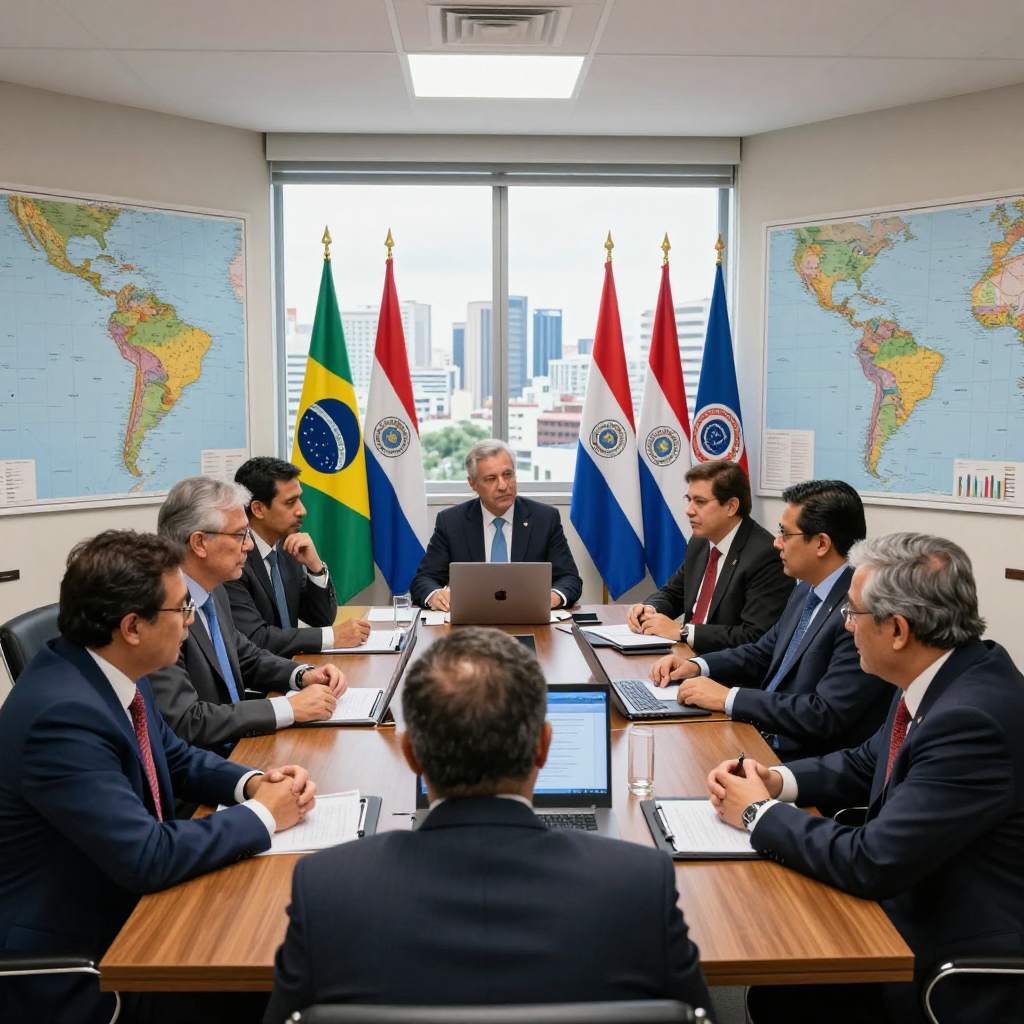
Asunción, Paraguay - In a move that has sparked mixed reactions among regional stakeholders, the Paraguayan government has recently signaled intentions to reassess its trade and economic strategies, potentially impacting its role within the Mercosur bloc. This development comes amid broader discussions on enhancing Paraguay's economic competitiveness and attracting foreign investment, particularly from Asia-Pacific markets.
Mercosur members, including Brazil, Argentina, Uruguay, and Paraguay, have long shared a common market framework under the Mercado Común del Sur treaty. However, recent internal dynamics within Mercosur, coupled with global trade shifts, have placed additional pressure on member states to reconsider their economic priorities. According to sources familiar with government discussions, Paraguay may seek to negotiate greater flexibility in its trade agreements, which could allow for independent negotiations with non-Mercosur partners. Such a move, if implemented, could reshape the bloc's cohesion and provide new opportunities for foreign investors looking to tap into Paraguay's growing agricultural and energy sectors.
Economic experts in Asunción caution that while Paraguay's desire to attract foreign direct investment is understandable, any significant deviations from Mercosur norms could lead to trade disputes within the alliance. Analysts suggest that Paraguay's move may reflect broader regional trends, where countries are navigating between the benefits of integration and the demands of individual economic growth.
For businesses operating in Paraguay, particularly those involved in trade-heavy industries such as agriculture, textiles, and energy, the proposed changes could present both challenges and opportunities. While increased autonomy in trade negotiations might open doors to new markets, it also risks creating regulatory uncertainty. Companies will need to monitor any official announcements closely and adapt their strategies accordingly.
In neighboring countries, reactions to Paraguay's potential shift vary. Some see it as an opportunity for all Mercosur members to rethink integration objectives, while others view it as a challenge to the bloc's unity. As Paraguay continues to explore this path, stakeholders across the region are keeping a close eye on developments, eager to understand how this could reconfigure economic ties within Mercosur and beyond.
As Paraguay navigates these complex trade dynamics, its leadership is balancing national priorities with regional commitments. The precise nature of any policy changes remains to be seen, but one thing is clear: Paraguay's approach to trade could significantly influence its standing within Mercosur and its attractiveness to international business investors in the years ahead.