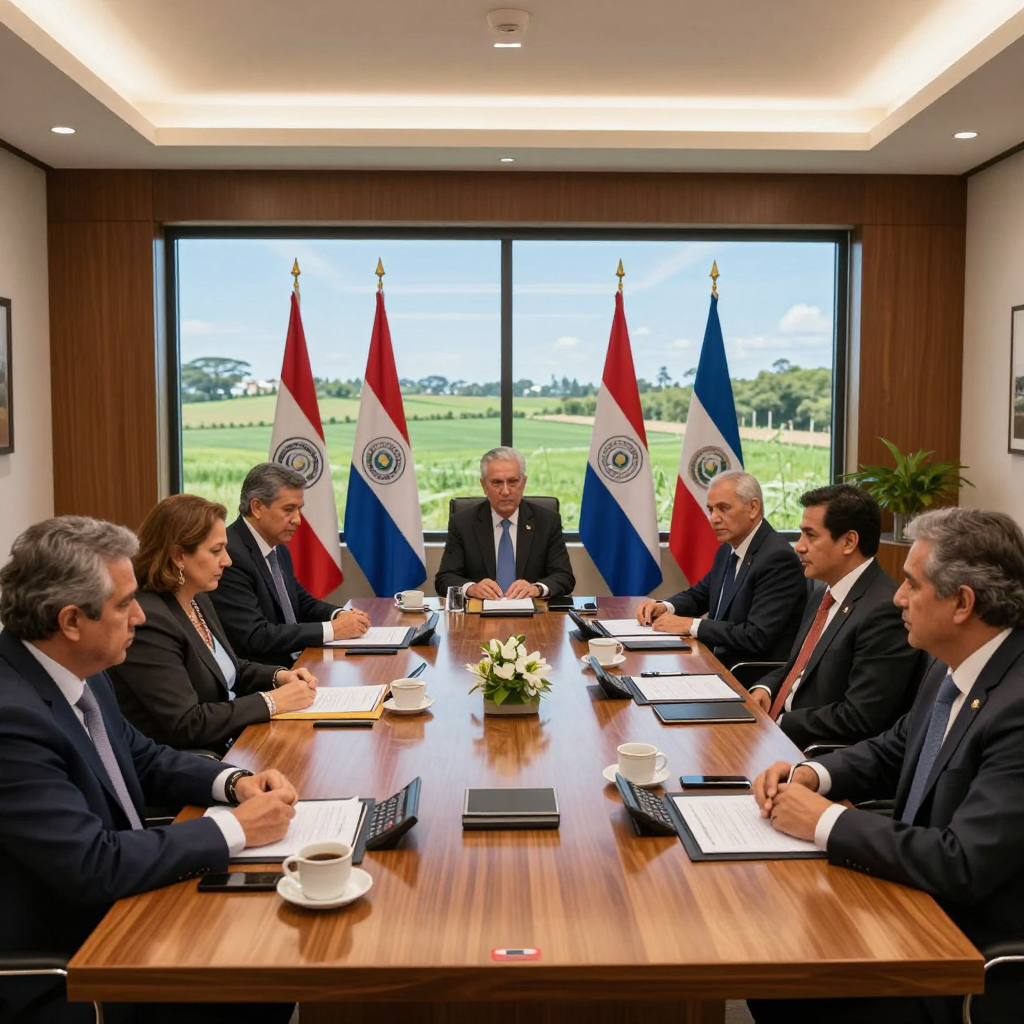
Asunción, Paraguay — In a landscape marked by global economic uncertainty, Paraguay stands at a critical juncture as it navigates its position within Mercosur, a regional trading bloc comprising Argentina, Brazil, Uruguay, and Venezuela. Recent developments underscore Paraguay's strategic importance in bolstering the bloc's influence, particularly as Mercosur explores deeper ties with key economies worldwide.
At the heart of these discussions is Paraguay's ability to serve as a bridge between Mercosur and emerging markets. Over the past year, the country has been actively engaged in negotiations aimed at strengthening trade agreements that could significantly impact its export sectors, including agriculture, textiles, and energy resources. These efforts are not only crucial for Paraguay's domestic economy but also for the broader regional integration goals set forth by Mercosur.
Economic analysts suggest that Paraguay's commitment to open trade policies aligns well with current global trends emphasizing sustainability and diversification. The nation's vast agricultural lands, rich natural resources, and growing manufacturing sector present significant opportunities for foreign investment. Experts predict that successful trade deals could lead to a surge in exports, boosting GDP growth and creating jobs across various sectors.
However, challenges remain. Political instability in neighboring countries and internal regulatory hurdles continue to pose risks. Analysts caution that Paraguay must address these issues to ensure smooth implementation of trade strategies. Furthermore, the country's infrastructure, particularly in logistics and transportation, may need enhancements to support increased trade volumes.
On the diplomatic front, Paraguay has been vocal about the need forMercosur to adopt more flexible approaches in its trade negotiations. This stance reflects a growing realization among member states that adaptability is essential for competing in a rapidly evolving global market. Paraguay's proactive engagement with both regional and international partners indicates a shift towards a more dynamic role within Mercosur, potentially elevating its status from participant to leader in certain areas.
For businesses operating in Paraguay, the current environment presents both opportunities and risks. Companies already established in the country are eyeing potential expansion, while new entrants are considering market entry. Key sectors such as agribusiness, renewable energy, and technology are expected to see heightened activity as Paraguay leverages its competitive advantages.
In conclusion, Paraguay's journey within Mercosur is one of cautious optimism. While the path forward is fraught with challenges, the potential rewards for both the nation and the broader bloc are substantial. As Mercosur looks to redefine its role in global trade, Paraguay's voice will be integral to shaping the future of regional integration.