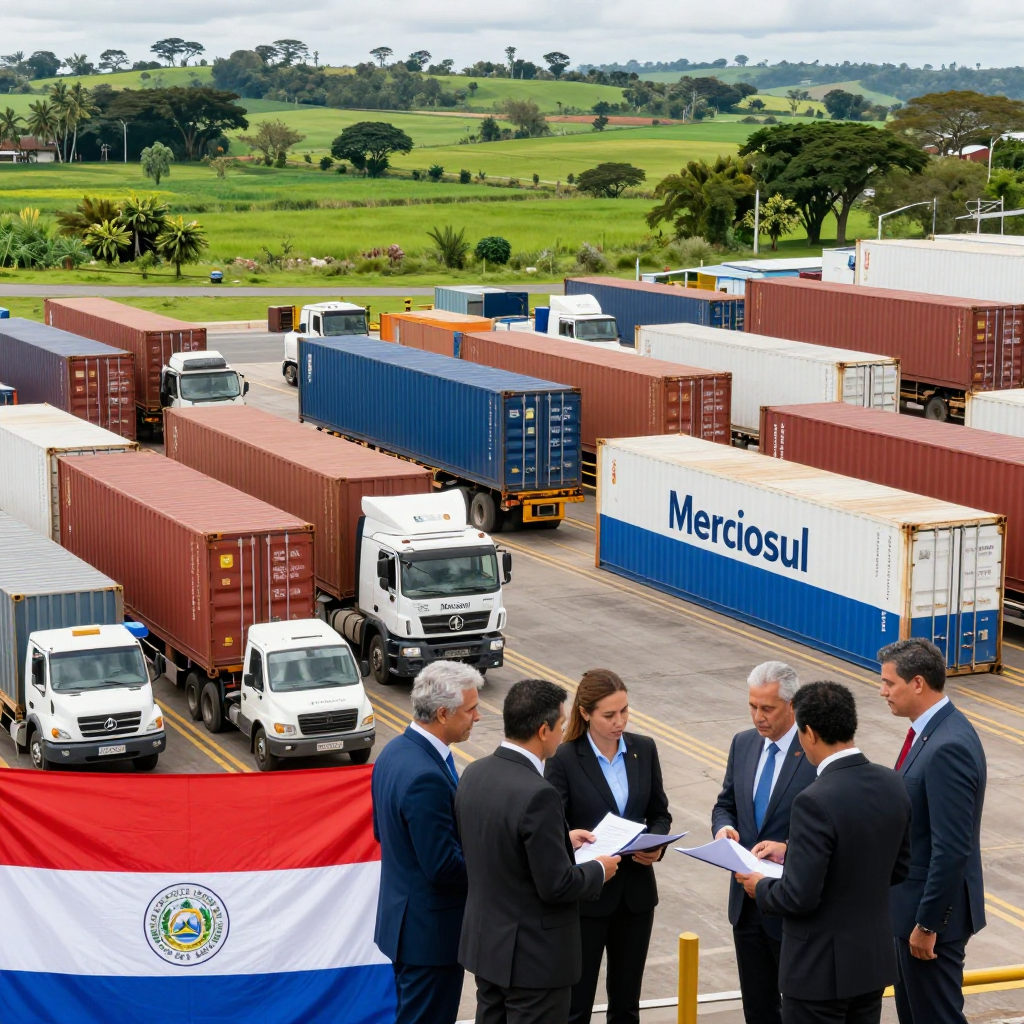
Asunción — In a world where trade blocs and diplomatic relations are reshaping the global economic landscape, Paraguay's role within Mercosur (Mercado Común del Sur) is emerging as a focal point for international businesses seeking opportunities in South America. With its strategic location connecting Brazil, Argentina, and Uruguay, Paraguay serves as both a logistical hub and a market with considerable growth potential.
Mercosur, comprising Argentina, Brazil, Paraguay, Uruguay, and Venezuela (currently suspended), has historically been a cornerstone of regional trade and economic cooperation. However, recent shifts in global trade dynamics, including the rise of alternative trade agreements and the challenges posed by the COVID-19 pandemic, have redefined the bloc's priorities. Paraguay, as one of the smaller economies within Mercosur, plays a unique role: it acts as a bridge between larger economies and serves as a testing ground for regional policies that could influence broader integration efforts.
**The Business Imperative of Regional Integration**
Analysts emphasize that Paraguay's participation in Mercosur is not just symbolic; it is economically significant for both the nation and the bloc. According to data from the Ministry of Industry and Commerce, Paraguay's exports to other Mercosur countries constitute approximately 60% of its total exports. This reliance underscores the importance of maintaining strong trade ties within the bloc, particularly as discussions around tariff harmonization and cross-border investments gain traction.
From a business perspective, Paraguay offers several advantages. Its low corporate tax rates and incentives for foreign direct investment (FDI) make it an attractive destination for businesses looking to expand into the Mercosur market. Additionally, the country's robust agricultural sector, which accounts for roughly 40% of GDP, positions it as a key player in food security and agribusiness, sectors that are increasingly critical in the post-pandemic era.
**Diplomatic Challenges and Opportunities**
While Paraguay stands to benefit significantly from its Mercosur membership, the country also faces diplomatic challenges. Recent tensions within the bloc, including disagreements over trade policies and political alignments, have raised concerns about internal cohesion. However, Paraguayan officials have consistently emphasized their commitment to maintaining regional unity, often advocating for measures that promote inclusivity and balanced economic growth.
In addition to Mercosur, Paraguay is also exploring partnerships beyond the bloc. Discussions about potential trade agreements with the European Union and Asia-Pacific nations indicate a proactive approach toward diversifying its trade relationships. This strategy could help mitigate risks associated with over-reliance on traditional markets, providing stability for domestic industries and investors.
**Investment Outlook and Future Prospects**
For international businesses eyeing Paraguay, the current environment presents both risks and opportunities. While the country's infrastructure development remains a work in progress, ongoing projects in transportation and logistics are expected to enhance connectivity within Mercosur. These improvements, coupled with government initiatives aimed at streamlining bureaucratic processes for foreign investors, could accelerate growth in key sectors such as manufacturing, energy, and technology.
In conclusion, Paraguay's role within Mercosur is integral to understanding broader regional dynamics and global trade trends. As the bloc adapts to new realities and explores enhanced cooperation, Paraguay's ability to leverage its strengths—such as its central location, favorable business climate, and growing integration—will be crucial. For international businesses, the country represents a promising frontier within a strategically important region.