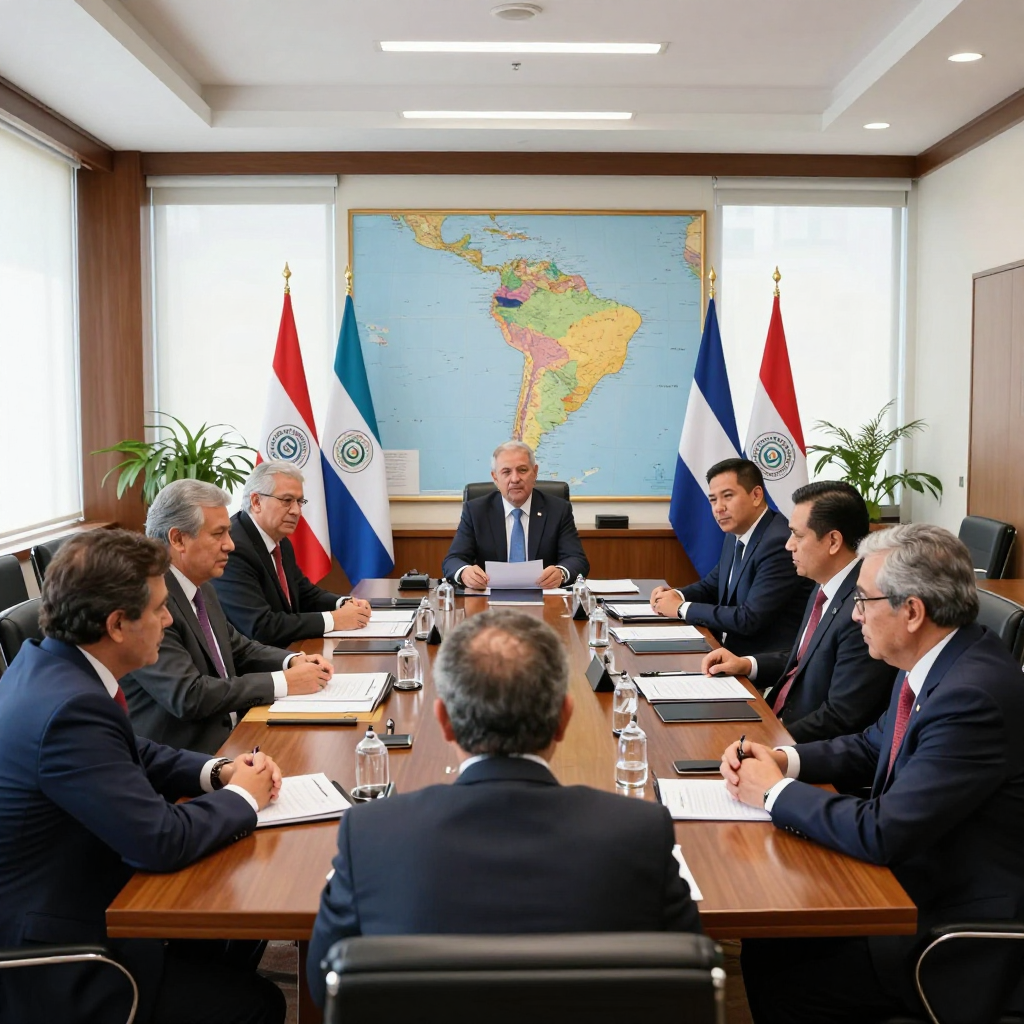
ASUNCION, Paraguay – In a significant move that could reshape Paraguay’s economic landscape, the national Congress recently passed a comprehensive investment law designed to ease barriers for foreign investors and stimulate domestic economic activity. This legislation represents a key policy shift, emphasizing transparency, stability, and competitive incentives to attract both regional and global partners. Analysts say the law aligns with Paraguay’s strategic position within Mercosur, potentially enhancing its role as a gateway between South America and broader international markets.
The new investment framework seeks to address long-standing challenges faced by businesses operating in Paraguay, such as bureaucratic hurdles, unclear regulations, and limited access to financing. By introducing streamlined approval processes, tax incentives tailored to various sectors, and robust intellectual property protections, the government aims to make Paraguay a more attractive destination for foreign direct investment (FDI). According to official statements, the law also includes provisions for joint ventures and partnerships, encouraging collaboration between local enterprises and multinational corporations.
From an economic standpoint, this legislative initiative comes at a critical juncture for Paraguay. The country, despite being one of the fastest-growing economies in the region over recent years, still faces structural constraints such as underdeveloped infrastructure, limited human capital development, and a narrow export base heavily reliant on agriculture. By fostering greater economic diversification through increased foreign investment, particularly in areas like technology, manufacturing, and renewable energy, Paraguay hopes to create more sustainable growth opportunities and reduce its vulnerability to external shocks.
Mercosur members, including Brazil, Argentina, Uruguay, and Venezuela, have historically played a pivotal role in Paraguay’s trade dynamics. The new investment law is seen by analysts as an effort to solidify Paraguay’s position within the bloc, leveraging its central location and abundant natural resources. With Mercosur negotiations ongoing regarding internal reforms and potential expansions, Paraguay’s updated investment climate could position it as a bridge between Mercosur markets and non-member countries. This could open doors to enhanced trade relationships with countries like China, South Korea, and the European Union, which have expressed interest in deeper ties with the region.
However, challenges remain. Some critics argue that while the new law offers promising reforms, its success will depend on effective implementation and enforcement. Concerns about corruption, regulatory inconsistencies, and political volatility persist, which could deter potential investors if not adequately addressed. Moreover, Paraguay must continue to invest in critical infrastructure and education systems to fully capitalize on incoming investments and ensure that economic benefits are equitably distributed across the population.
Going forward, the effectiveness of the new investment law will serve as a litmus test for Paraguay’s commitment to economic modernization and regional integration. As the government works to balance domestic priorities with international commitments, stakeholders anticipate that successful execution of these policies could mark a turning point in Paraguay’s economic trajectory, solidifying its standing as a dynamic partner within Mercosur and the global economy.