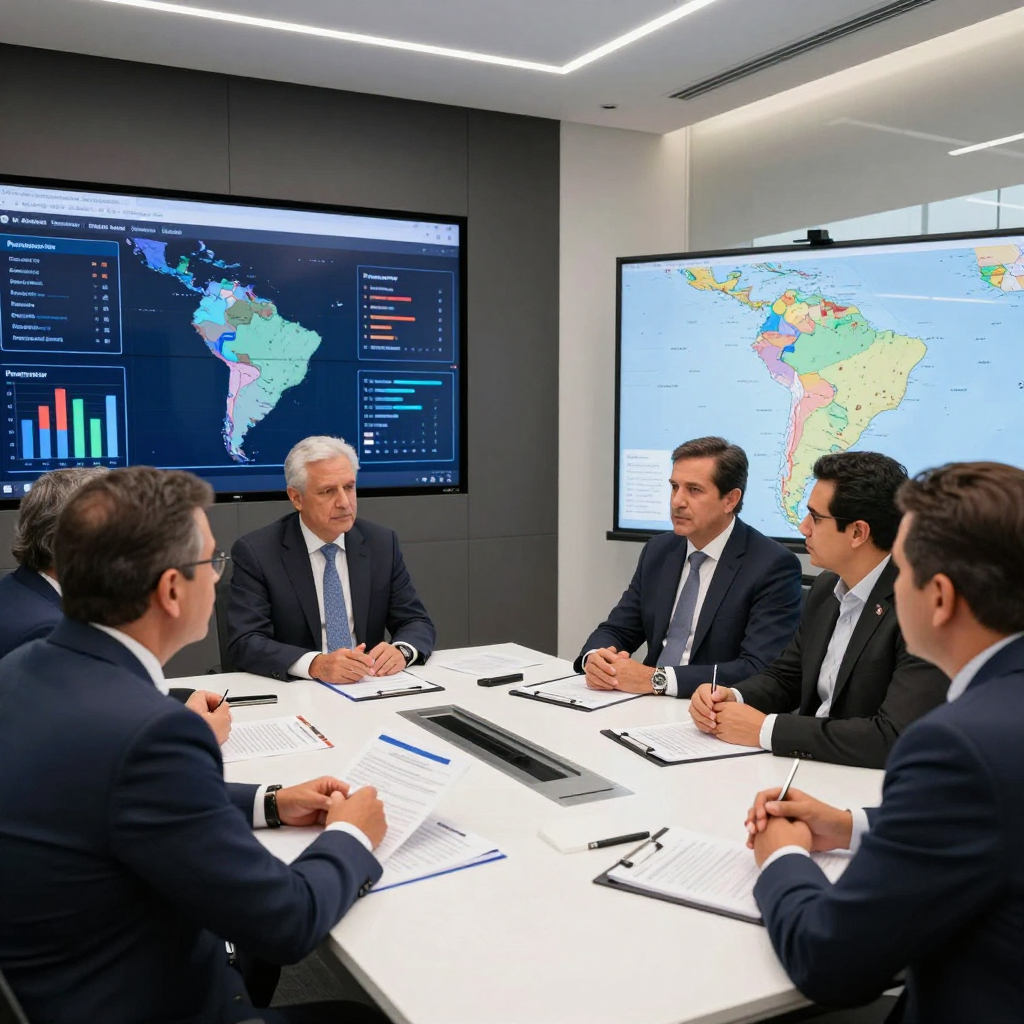
Asunción, Paraguay — In a move that signals a renewed commitment to enhancing its economic integration within Mercosur, the Paraguayan government has unveiled a series of policy reforms designed to simplify trade regulations and bolster foreign direct investment (FDI). These initiatives come at a crucial time as Mercosur countries seek to revitalize their collective trade agenda amid global economic challenges.
Key among the announced reforms is a proposal to modernize customs procedures, which aims to reduce bureaucratic delays and lower operational costs for businesses. According to the Ministry of Industry and Commerce, these changes could enhance the efficiency of cross-border transactions and make Paraguay more attractive to exporters and investors. "Simplifying trade barriers is essential for Paraguay to capitalize on its strategic location within the region," said an official from the ministry, emphasizing the importance of aligning domestic policies with Mercosur standards.
Additionally, the government has focused on strengthening intellectual property rights regulations, a critical step toward fostering innovation and encouraging technology transfer. This move is particularly significant for multinational corporations considering investments in Paraguay, as it addresses one of the primary concerns for businesses operating in developing markets. Experts believe that improved IP protections could open doors for sectors such as pharmaceuticals, agribusiness, and renewable energy.
The reforms also include plans to expand public-private partnerships (PPPs) in infrastructure development, targeting sectors such as logistics and transportation. By upgrading key roads, ports, and communication networks, the government hopes to facilitate smoother supply chains and boost overall economic productivity. "Enhancing connectivity is vital not only for internal commerce but also for integrating Paraguay into Mercosur's broader trade network," noted a spokesperson from the National Development Institute.
While analysts are cautiously optimistic about the potential impact of these policies, they highlight the need for effective implementation and consistent enforcement. "Reforms alone are not enough; success will depend heavily on the government’s ability to deliver on its promises," said a leading economist based in Asunción. "However, if executed properly, these measures could position Paraguay as a more resilient and competitive partner within Mercosur."
As the country navigates its economic priorities, businesses and investors are closely monitoring these developments. With the backdrop of ongoing negotiations for deeper regional integration, Paraguay’s efforts to modernize its trade landscape are seen as a positive sign for both local enterprises and international stakeholders looking to expand their footprint in the Mercosur region.