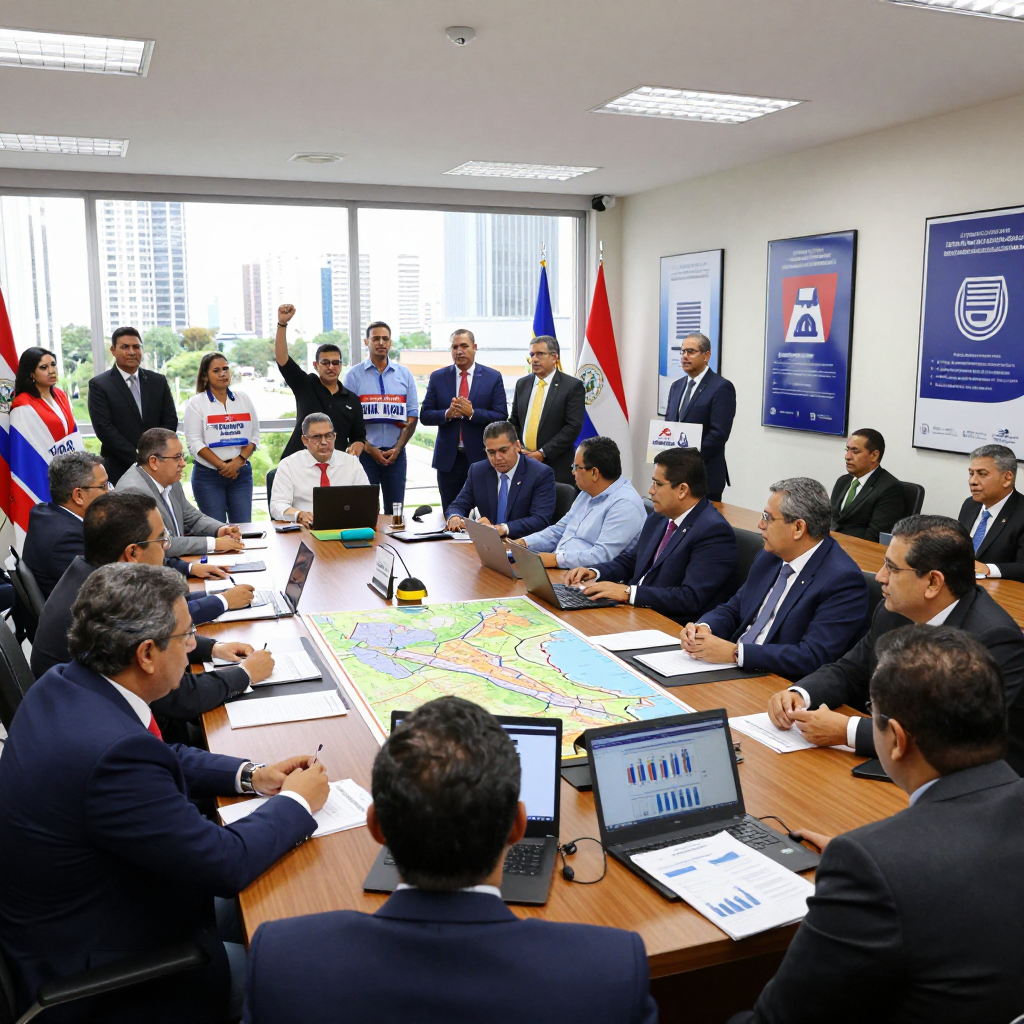
ASUNCION — In a significant move that could reshape Paraguay's economic landscape, the government has unveiled a comprehensive set of reforms designed to attract foreign direct investment and enhance the country's integration into the Mercosur trading bloc. These initiatives come as Paraguay seeks to position itself as a more competitive market for both regional and global investors, amid ongoing efforts to diversify its economy beyond traditional sectors such as agriculture and hydroelectric power.
Central to these reforms is a proposed modernization of the tax framework, intended to reduce uncertainties for businesses and provide clearer guidelines for compliance. The government is also focusing on streamlining bureaucratic processes to expedite project approvals, which have historically been cited as bottlenecks for foreign investments. Additionally, there are informal indications that Paraguay may soon ratify treaties aimed at improving intellectual property protections—a move that analysts say could reassure multinational corporations considering expanding operations in the country.
From a political perspective, these reforms reflect a broader strategy endorsed by President Mario Abdo Benítez’s administration, which has prioritized economic growth and stability since taking office. The reforms aim to address concerns raised by international business leaders who have expressed interest in Paraguay but highlighted existing barriers related to regulatory complexity and infrastructure development.
In the context of Mercosur, these measures are particularly noteworthy. Paraguay, as a founding member of the bloc alongside Brazil, Argentina, Uruguay, and Venezuela, stands to benefit from increased integration through harmonized policies and trade agreements. Experts suggest that Paraguay’s commitment to economic reform could enhance its attractiveness as a hub for intra-bloc trade, especially in sectors such as agribusiness and manufacturing.
However, challenges remain. The success of these reforms hinges on Congress’s ability to swiftly pass supporting legislation, as well as the cooperation of local stakeholders, including labor groups and private sector interests. Moreover, Paraguay continues to face external pressures, such as fluctuating commodity prices—a primary driver of its economy—which underscores the need for diversified growth strategies.
Businesses watching Paraguay’s progress are cautiously optimistic. While some express concerns about implementation timelines, others view the reforms as a positive signal of the government’s willingness to adapt to changing market conditions. Analysts predict that if executed effectively, these changes could lead to significant improvements in Paraguay’s business climate, potentially attracting new investments and fostering sustainable economic development.
As the country navigates these reforms, its trajectory within Mercosur will be closely monitored. The outcome of these efforts could not only redefine Paraguay’s economic role within the region but also influence broader discussions around regional economic integration and competitiveness.