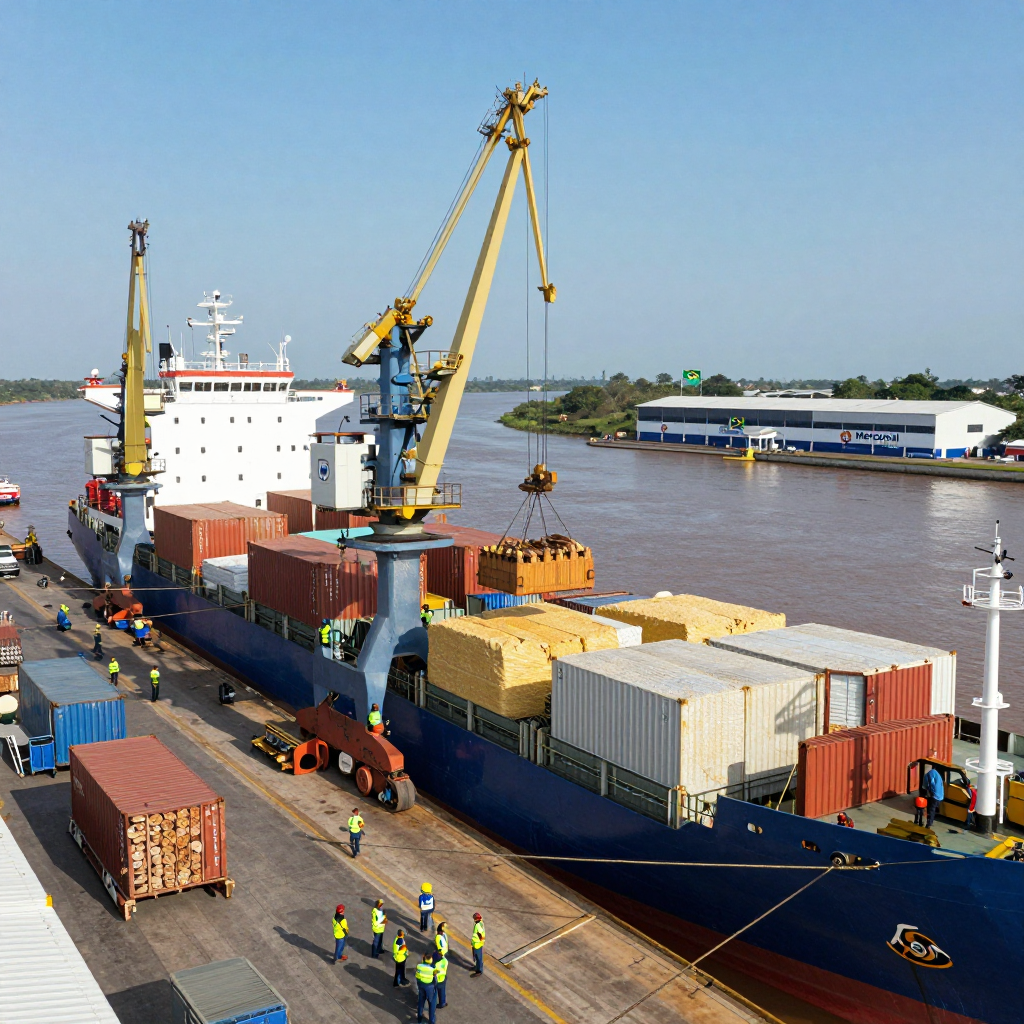
Asunción, Paraguay – Paraguay’s economy has shown resilience over the past year, bolstered by robust trade relations with its Mercosur partners. The South American nation, known for its agricultural exports and strategic location at the heart of South America, has been actively leveraging its membership in the Mercosul Common Market to enhance its economic prospects. According to recent data from the Ministry of Industry and Commerce, Paraguay's trade volume with Mercosur countries has risen significantly, contributing to a 4.2% GDP growth in the first quarter of 2023, a figure that outpaces regional averages.
Mercosur, which includes Brazil, Argentina, Uruguay, and Paraguay alongside associate members such as Bolivia and Chile, remains a cornerstone of Paraguay’s economic strategy. The bloc facilitates tariff-free trading among member states, providing Paraguay with access to larger markets for its soybeans, corn, beef, and timber products. In particular, Brazil has emerged as a critical partner, absorbing a substantial portion of Paraguay’s agricultural exports. Analysts suggest that this mutual dependency could further deepen as both countries explore opportunities in renewable energy projects, especially given Paraguay’s significant hydroelectric potential.
Within the context of global trade dynamics, Paraguay is also positioning itself as a gateway for international investors looking to enter the Mercosur market. The country’s stable political environment, relatively low labor costs, and preferential trade agreements under Mercosul have attracted attention from multinational corporations. Notably, Paraguay's Free Trade Zone, located near the Brazilian border, has become a focal point for foreign direct investment (FDI). Companies from Asia and Europe have expressed interest in establishing manufacturing hubs there, taking advantage of incentives offered by the government to boost local production and export capabilities.
However, challenges remain on the horizon. Global economic uncertainties, including fluctuations in commodity prices and geopolitical tensions, could impact Paraguay’s trade performance. Moreover, internal issues such as infrastructure deficiencies and bureaucratic hurdles continue to pose obstacles for businesses operating in the country. Despite these concerns, Paraguayan authorities are committed to addressing these challenges through reforms aimed at improving logistics and streamlining regulatory processes.
In summary, Paraguay’s economic trajectory is closely tied to its active participation in Mercosul. As the country continues to benefit from improved trade relations within the bloc, it is poised to play an increasingly significant role in regional economic integration. With targeted policy measures and continued cooperation with Mercosul partners, Paraguay may solidify its position as a vital player in the South American economic landscape.