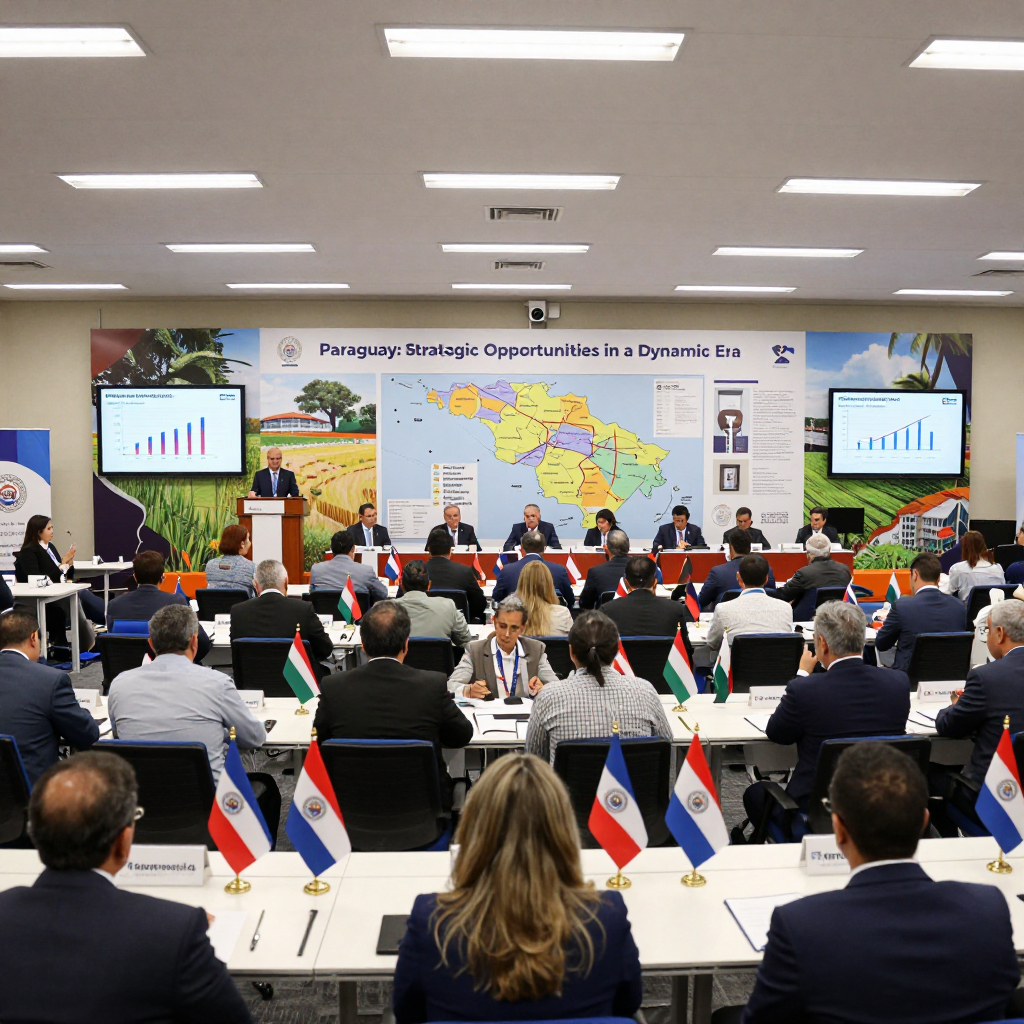
Asunción, Paraguay – In a region characterized by dynamic economic landscapes, Paraguay continues to emerge as a significant player within the Mercosur bloc, presenting both challenges and opportunities for international businesses. Recent developments suggest that the country’s strategic positioning could unlock new avenues for trade and investment.
Mercosur, the Southern Common Market, remains a cornerstone of Paraguay’s economic strategy. However, changes within the bloc, including shifting political alignments and evolving trade policies among member states, have prompted careful recalibration of Paraguay’s approach. This year, the nation has demonstrated increased autonomy in its trade negotiations, reflecting a desire to balance its commitments to Mercosur with the pursuit of bilateral agreements that could enhance its global market access.
Economic indicators point towards cautious optimism. GDP growth forecasts for 2023 hover around 2%, driven largely by robust agricultural exports, which account for over half of Paraguay’s merchandise exports. The agricultural sector, particularly soybeans and beef, continues to be a backbone of the economy, benefiting from high global demand. However, economic analysts warn that dependence on commodities exposes the country to external market volatility. Diversification strategies are seen as critical to long-term stability.
In terms of investment, Paraguay is actively courting foreign capital, especially in infrastructure development and renewable energy projects. President Mario Abdo Benítez’s administration has highlighted hydropower and solar energy as priority areas for investment, aiming to leverage Paraguay’s natural resources while addressing pressing environmental concerns. Recently, the government announced plans to streamline regulatory frameworks to attract more foreign direct investment (FDI). These initiatives come amid growing interest from Chinese and Brazilian companies looking to expand operations in the region.
Trade relationships, particularly within Mercosur, remain complex. While Paraguay maintains strong ties with Brazil, its largest trading partner, there have been discussions around potential adjustments to trade balances and tariff mechanisms. Analysts suggest that Paraguay may seek greater flexibility to negotiate trade terms independently, especially as it navigates emerging economic partnerships outside the Mercosur framework.
For international businesses considering Paraguay, the landscape presents a mix of established opportunities and emerging risks. The country’s low labor costs, extensive natural resources, and strategic location between South America’s largest economies offer undeniable appeal. However, challenges such as underdeveloped logistics infrastructure and bureaucratic hurdles persist. Businesses operating in Paraguay should prioritize local partnerships and adaptability to navigate these complexities effectively.
Looking ahead, Paraguay’s ability to capitalize on its strengths within Mercosur while pursuing independent economic strategies will be crucial. As the country refines its approach to trade and investment, it seeks to strike a balance between integration and autonomy, positioning itself as a resilient and attractive market in a rapidly changing global economy.