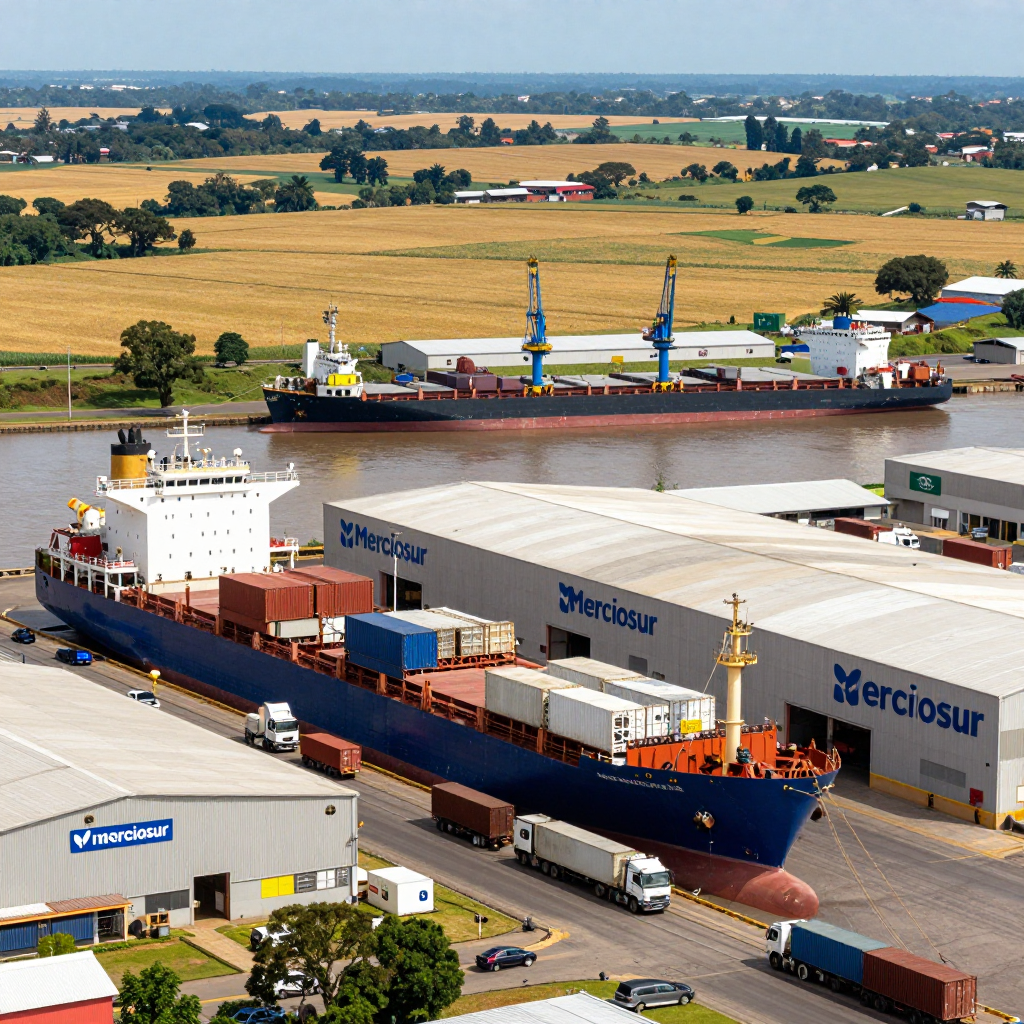
Asunción, Paraguay – Amidst a backdrop of global economic uncertainty, Paraguay's business landscape continues to evolve, driven largely by its integration into the Mercosur trading bloc. Recent data from the Ministry of Finance indicates a steady improvement in key economic indicators, with a projected GDP growth rate of around 3% for 2023, supported by strong performance in agriculture and industry sectors.
Mercosur has emerged as a critical driver of economic dynamism for Paraguay, especially following the bloc's expansion efforts and renewed focus on internal trade liberalization. The country's strategic geographic position along the Paraguay River provides natural advantages for logistics and transportation, positioning it as a crucial link between South American markets. This logistical advantage is being harnessed through ongoing infrastructure projects, such as the expansion of ports and highways, which are expected to further enhance Paraguay's role as a regional transit point.
Agriculture remains a cornerstone of Paraguay's economy, with soybeans and corn continuing to dominate export volumes. According to officials from the National Institute of Statistics, these commodities accounted for over 70% of total exports in the first half of 2023, reflecting continued demand from Mercosur partners and beyond. The sector's success has been bolstered by favorable weather conditions and increased productivity, although analysts warn that dependency on these crops may necessitate diversification efforts to mitigate risks associated with price volatility and climate change.
In terms of investment, Paraguay has been actively courting both domestic and foreign capital, particularly in sectors such as renewable energy and agro-industry. The government's recent amendment to the Investment Law aimed at simplifying procedures and offering incentives has attracted interest from multinational corporations. However, challenges remain, including bureaucratic hurdles and limited access to financing, which may require concerted efforts to address in the coming years.
From a Mercosur perspective, Paraguay stands to benefit significantly from the bloc's renewed focus on deepening regional integration. Analysts note that while Paraguay has historically been one of the smaller economies in the group, its growing engagement in intra-bloc trade could lead to significant gains. Efforts to harmonize regulatory frameworks and reduce non-tariff barriers are expected to facilitate smoother trade flows and attract greater investment.
Looking ahead, Paraguay's business community is cautiously optimistic about the prospects for sustained growth. With ongoing dialogue between the government and private sector, there is a growing recognition of the need for comprehensive strategies that balance short-term gains with long-term sustainability. While challenges persist, including the need for improved governance and infrastructure development, the current trajectory suggests that Paraguay is well-positioned to capitalize on its emerging opportunities within Mercosur and beyond.