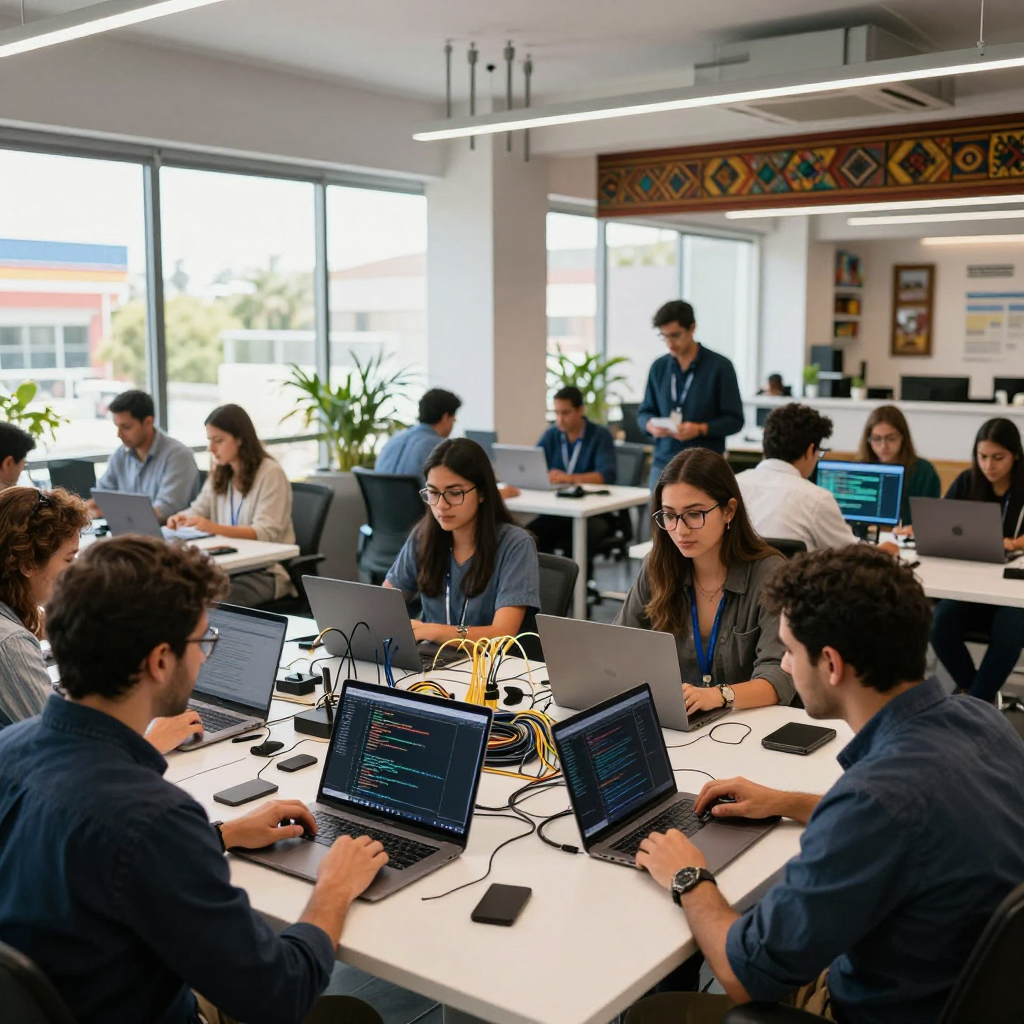
ASUNCION, Paraguay—Over the past few months, Paraguay has emerged as a focal point for technological innovation and digital transformation within the Mercosur region. A surge in investment in telecommunications infrastructure, coupled with government initiatives to foster a tech-friendly environment, has created a fertile ground for startups and established enterprises alike. This trend is not merely a local phenomenon; it reflects broader shifts in Mercosur’s economic landscape, where technology adoption is increasingly seen as a pathway to competitiveness and growth.
The catalyst for Paraguay’s digital transformation lies in its telecommunications sector. Recent upgrades to broadband internet and mobile networks have significantly improved connectivity across the country, reducing barriers to entry for both local and foreign businesses. According to data from the National Statistics Institute (INE), internet penetration in urban areas has climbed to over 80%, up from just 65% five years ago. This expansion of digital access is crucial, as it provides the necessary foundation for businesses to adopt advanced technologies such as cloud computing, e-commerce platforms, and remote work solutions.
In response to this technological evolution, Paraguay is experiencing a burgeoning startup ecosystem. Entrepreneurs are leveraging the newly accessible tools to address local challenges through innovative solutions. Industries ranging from fintech to agribusiness are exploring digital platforms that streamline operations and enhance efficiency. For instance, fintech startups are developing mobile banking apps tailored to the needs of Paraguay’s rural populations, which previously had limited access to financial services. These innovations not only provide economic opportunities but also contribute to the broader goal of financial inclusion.
Moreover, Paraguay’s efforts align with regional trends in Mercosur, where countries like Brazil and Uruguay have already established themselves as tech hubs. By positioning itself as an attractive market for tech investment, Paraguay aims to attract foreign capital while nurturing domestic talent. The government has taken steps to support this vision, including the introduction of policies to reduce bureaucracy for tech companies and incentives for research and development. Analysts suggest that Paraguay could become a strategic bridge for international businesses looking to expand into the larger Mercosur market, given its geographical centrality and emerging tech capabilities.
However, challenges remain. While progress is evident, issues such as cybersecurity concerns, regulatory uncertainty, and the need for skilled labor persist. Addressing these hurdles will be critical to ensuring sustained growth and maximizing the benefits of digital transformation. The success of Paraguay’s tech journey will depend on its ability to balance innovation with stability, creating an environment where both domestic startups and multinational corporations can thrive.
In conclusion, Paraguay’s embrace of digital transformation represents a promising chapter in the country’s economic narrative. With ongoing improvements in telecommunications, a growing startup culture, and supportive government measures, the nation is poised to play a significant role in Mercosur’s tech-driven future. For international business readers, Paraguay offers a compelling case study in how smaller economies can leverage technology to drive growth and compete on a global stage.