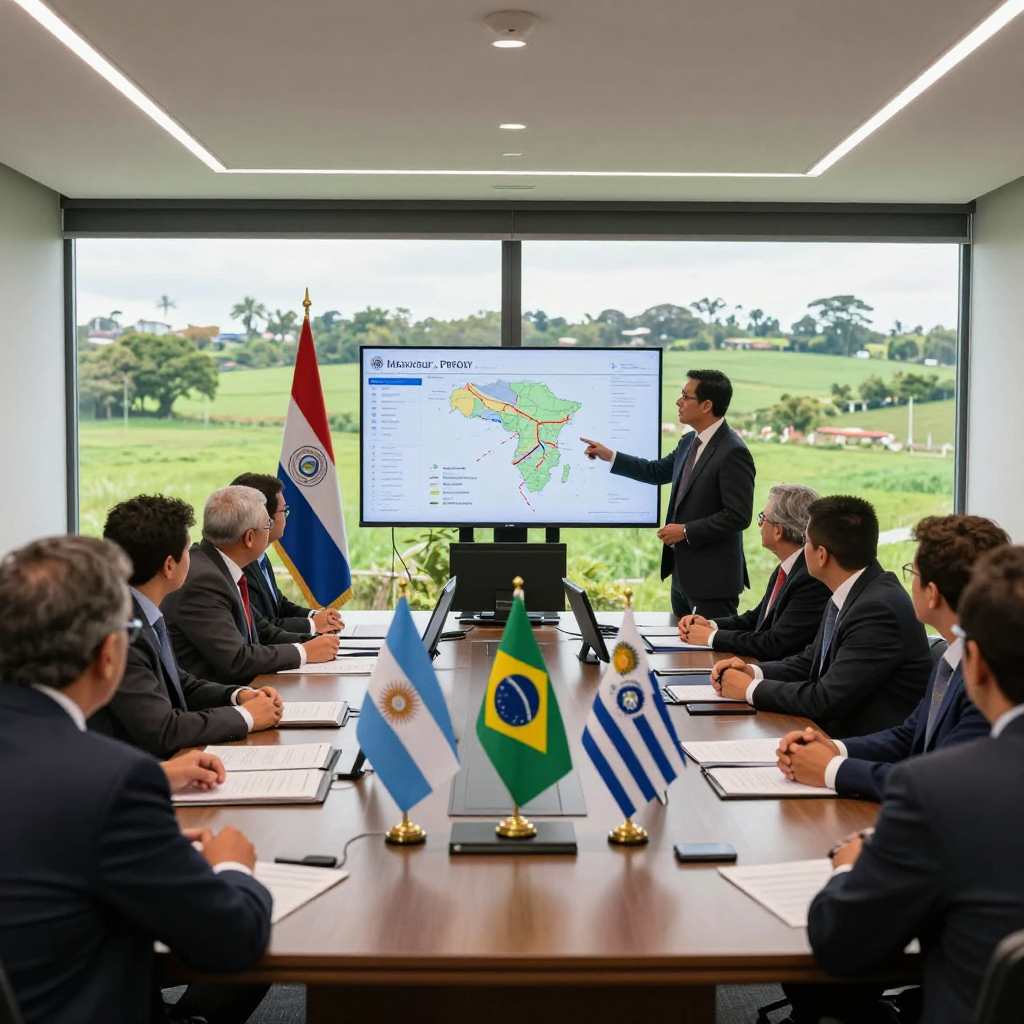
Asunción, Paraguay – In an era marked by complex global trade currents, Paraguay's position within Mercosur remains strategically significant. The country, known for its agricultural exports and untapped economic potential, is actively seeking to enhance its profile among international investors. Recent discussions at the Mercosur level point towards increased emphasis on attracting foreign capital in sectors such as agribusiness, logistics, and renewable energy.
Mercosur, comprising Argentina, Brazil, Paraguay, Uruguay, and Venezuela, has been navigating challenges related to fluctuating tariffs, changing trade patterns, and the influence of external markets. Paraguay, while small in comparison to its larger neighbors, offers unique advantages due to its geographical connectivity and commitment to free trade policies. According to analysts, this positioning could make it an attractive hub for businesses looking to access broader Latin American markets through strategic partnerships.
In recent months, Paraguayan authorities have emphasized initiatives aimed at streamlining investment processes and fostering a more business-friendly environment. These efforts include updates to regulatory frameworks and targeted incentives for sustainable development projects. "We are committed to ensuring that Paraguay becomes a key player in Mercosur’s trade agenda," said a spokesperson from the Ministry of Industry and Commerce, highlighting ongoing negotiations to expand bilateral trade agreements with non-Mercosur countries.
The potential for collaboration with other Mercosur members also looms large. Paraguay's focus on infrastructure development aligns with Brazil's ambitious plans for boosting cross-border connectivity, potentially benefiting both countries' economies. Meanwhile, the region's growing emphasis on digital trade presents new opportunities for Paraguay, where technology-driven solutions could help modernize its export sectors.
However, challenges persist. Political stability and corruption remain areas of concern for some investors, although recent initiatives to strengthen governance structures aim to address these issues. Additionally, Paraguay's reliance on commodity exports leaves it vulnerable to global market fluctuations. Experts suggest that diversifying trade partners beyond traditional Mercosur ties could mitigate risks and bolster economic resilience.
Looking ahead, Paraguay's trajectory within Mercosur will largely depend on its ability to capitalize on emerging opportunities while managing existing constraints. By focusing on sectors with high growth potential and enhancing its strategic relationships within the bloc, Paraguay aims to solidify its role as an integral part of the region's economic landscape.
For international business readers, the message is clear: Paraguay presents a compelling case study in leveraging Mercosur's strengths to drive economic growth amid global trade complexities. As the region continues to adapt to a rapidly changing world, Paraguay's prospects for attracting strategic investments appear brighter than ever.