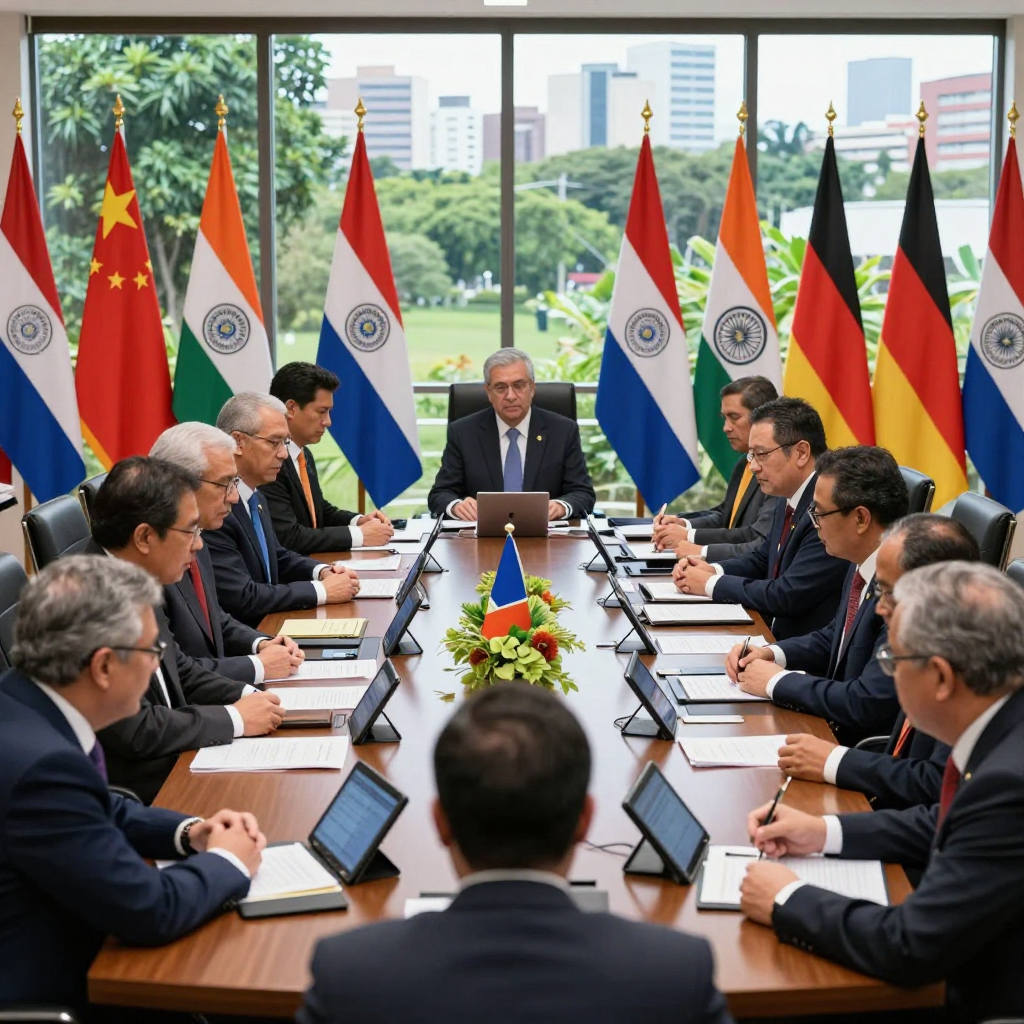
Asunción, Paraguay — In a rapidly evolving global trade landscape, the Southern Common Market (Mercosur) is making strides to reposition itself as a key player in international commerce. At the heart of these efforts is Paraguay, which is leveraging its membership to drive economic growth and strengthen its ties with regional and global markets.
Mercosur, comprising Argentina, Brazil, Paraguay, Uruguay, and Venezuela (currently suspended), has been revisiting its trade strategies to adapt to changing geopolitical and economic realities. Recent developments indicate a renewed focus on expanding partnerships beyond traditionalMercosur allies, particularly in Asia and Europe, where demand for Latin American goods continues to rise. Analysts suggest that this shift could open new avenues for Paraguayan exporters, especially in sectors such as agriculture, textiles, and manufacturing.
In Asunción, government officials have expressed optimism about Paraguay's role in these initiatives. The country's Prime Minister highlighted the potential benefits of increased trade liberalization, emphasizing that strategic alliances could help diversify Paraguay's export portfolio and reduce dependency on traditional markets. "We are actively exploring opportunities to deepen our economic ties with emerging economies," he said, noting that such partnerships could also attract significant foreign direct investment into Paraguay’s growing industries.
Diplomatic relations are also playing a pivotal role in shaping Mercosur's future. The bloc is engaging in high-level talks with entities such as the European Union and China, aiming to negotiate preferential trade agreements that benefit all member countries. Paraguay, with its strategically located infrastructure and competitive production costs, is well-positioned to capitalize on these opportunities. The country's commitment to streamlining trade regulations and improving logistics, including infrastructure upgrades along key corridors, underscores its readiness to participate fully in regional and global trade networks.
Experts note that while the prospects are promising, challenges remain. Paraguay, like other Mercosur members, faces hurdles such as bureaucratic inefficiencies, market competition, and the need for sustained policy reforms. Nevertheless, the ongoing negotiations signal a proactive approach by Mercosur to adapt to new global trade norms. As Mercosur seeks to enhance its influence within the world economy, Paraguay is demonstrating its commitment to being a driving force behind these efforts.
Analysis from local economists suggests that if successful, these trade expansion strategies could lead to increased GDP growth and job creation in Paraguay. The integration of advanced technologies and sustainable practices in export-oriented industries is also expected to play a critical role in attracting investment and ensuring long-term economic viability.
In conclusion, Mercosur's pivot toward expanded trade partnerships presents Paraguay with unique opportunities to elevate its position in global commerce. While the road ahead may involve navigating complex negotiations and addressing internal challenges, the potential rewards for Paraguay’s economy and businesses are substantial. The country’s proactive stance positions it as a vital participant in reshaping Mercosur's future role in the international trade arena.