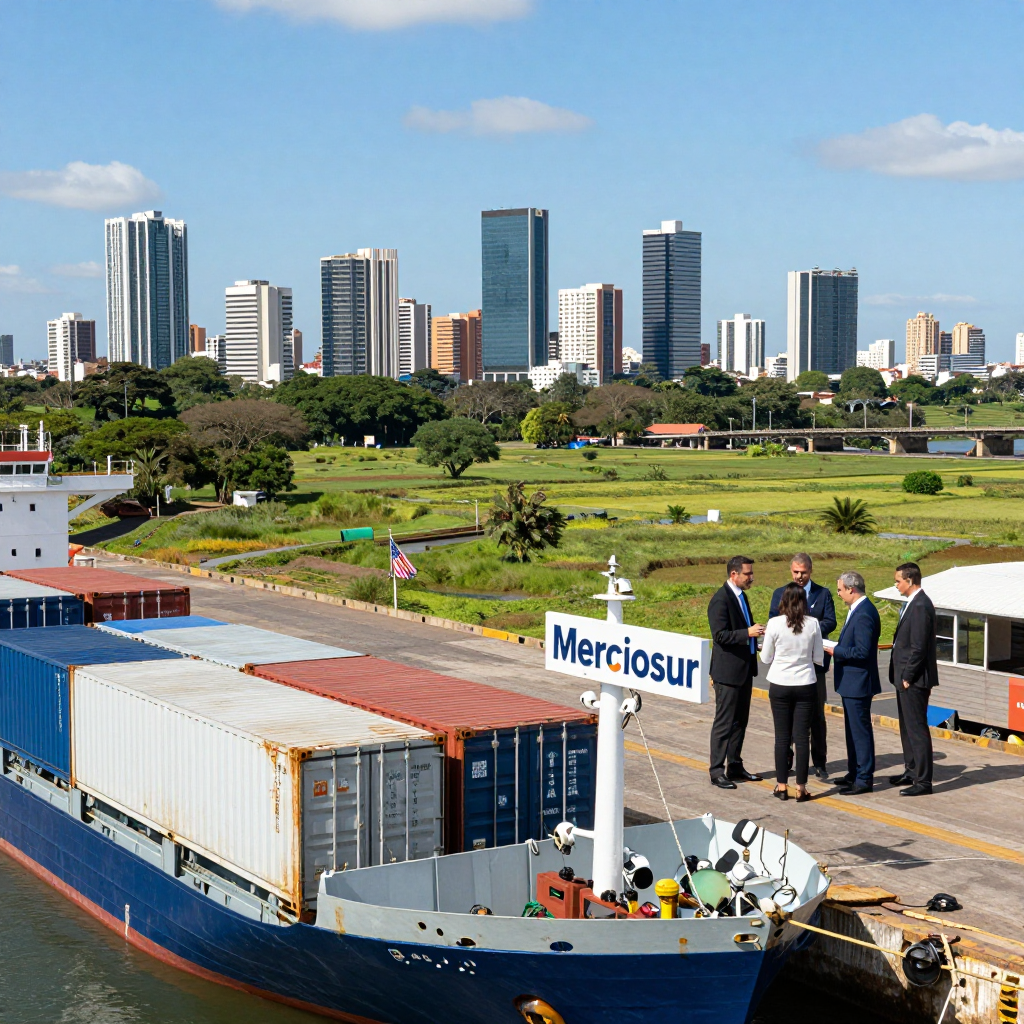
Asunción, Paraguay – In a rapidly evolving international trade landscape, Paraguay finds itself at a pivotal juncture within the Mercado Común del Sur (Mercosur). The regional bloc, which also includes Brazil, Argentina, Uruguay, and Venezuela as a temporary member, has been actively pursuing strategies to enhance its global trade links, a move that could significantly impact Paraguay's business environment.
Mercosur's renewed focus on expanding trade partnerships beyond traditional regions, such as negotiations for a free trade agreement with the European Union and ongoing dialogues with countries in Asia-Pacific and Africa, presents Paraguay with unique opportunities. The potential ratification of the Mercosur-European Union Agreement could open new markets for Paraguayan exports, particularly in sectors like agriculture, textiles, and industrial goods. This alignment could bolster Paraguay's role as a gateway for South American products to European consumers, positioning itself as a strategic partner within the bloc.
However, analysts caution that realizing these benefits hinges on addressing internal challenges. Paraguay's infrastructure, while improving, remains a critical bottleneck for effective export and import activities. Investment in logistics, transportation, and digital connectivity will be essential to capitalize on any expanded trade opportunities. Additionally, ensuring a competitive business environment through regulatory reforms and incentives could attract foreign investment aimed at leveraging Mercosur's enhanced market access.
From a diplomatic perspective, Paraguay's alignment with Mercosur's broader trade initiatives underscores its commitment to regional stability and economic cooperation. While political shifts within the bloc have occasionally strained relationships, Paraguay has historically maintained a pragmatic approach, focusing on areas of mutual benefit. This stance could prove advantageous as Mercosur seeks to reassert its relevance in the global trade order.
For local businesses, the upcoming changes offer both risks and rewards. Smaller enterprises may need support from the government to navigate complex international trade regulations, while larger firms with established export operations stand to gain from increased market exposure. Government officials have begun discussions on creating specialized programs to assist businesses in preparing for emerging trade dynamics, aiming to balance growth with sustainability.
In conclusion, as Mercosur continues to position itself as a key player in global trade, Paraguay's participation in these efforts holds significant promise for boosting its economy. While challenges remain, the trajectory suggests that Paraguay could play a crucial role in shaping Mercosur's future direction, benefiting from both regional synergies and global connections.