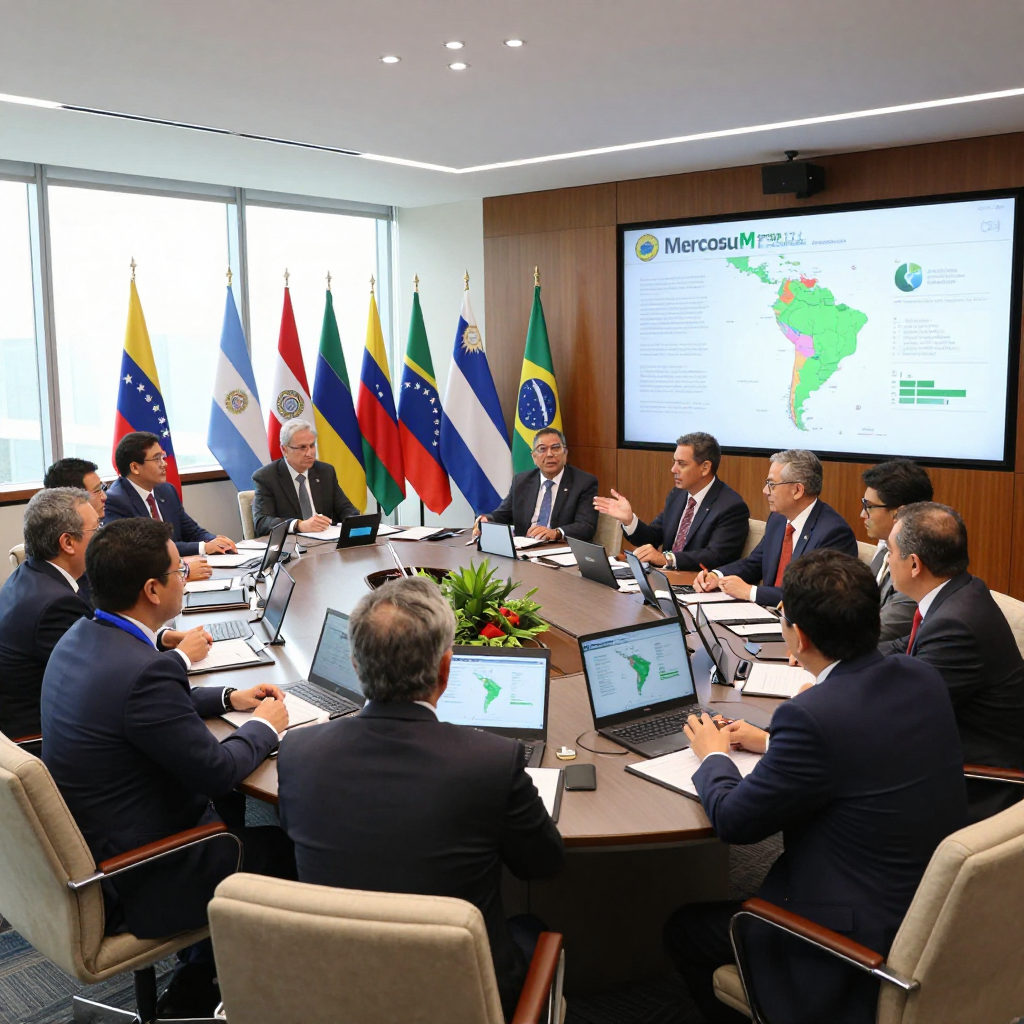
Asunción, Paraguay – In a push to bolster its economic ties globally, Paraguay continues to play a crucial role within Mercosur, the regional trading bloc that includes Argentina, Brazil, Uruguay, and Venezuela. Recent discussions among Mercosur members have focused on modernizing the organization to better adapt to contemporary global trade dynamics, a move that holds significant implications for Paraguay’s business landscape.
The modernization agenda, which was first proposed during the 48th Mercosur Summit held earlier this year, aims to address challenges such as digital trade barriers, intellectual property rights, and sustainable development goals. By embracing these reforms, Mercosur seeks to enhance its attractiveness to international investors and integrate more seamlessly into global supply chains. For Paraguay, this presents an opportunity to expand its export markets beyond traditional agricultural products, which currently account for a large portion of its GDP.
Economists note that Paraguay’s participation in Mercosur has traditionally provided it with access to larger markets and preferential trade agreements. However, the country’s reliance on commodities like soybeans and cotton has left it somewhat vulnerable to external market fluctuations. By aligning itself with Mercosur’s modernization efforts, Paraguay could diversify its economic base and capitalize on emerging sectors such as renewable energy and technology.
"Paraguay’s commitment to Mercosur’s modernization reflects its strategic vision to become a more resilient and competitive player in the international market," said Dr. Maria Torres, an economist specializing in South American trade at the University of Asunción. "By fostering innovation and adopting new trade standards, Paraguay can enhance its value proposition to multinational corporations seeking stable and forward-thinking business environments."
One notable aspect of Mercosur’s reform agenda involves strengthening cooperation with other trading blocs, including the European Union and Asia-Pacific nations. This could open doors for Paraguay to enter new markets, particularly in high-tech industries and services, which currently represent a smaller but growing segment of the country’s economy. Additionally, the focus on sustainability within Mercosur could provide Paraguay with a competitive edge, as global investors increasingly prioritize environmentally friendly practices and commitments.
While these changes hold promise, challenges remain. Internal political stability and bureaucratic reforms are essential prerequisites for fully realizing the benefits of Mercosur’s modernization. Paraguay must also ensure that domestic policies are aligned with the bloc’s new direction to avoid potential disruptions in trade flows. Businesses operating in Paraguay will need to stay informed of regulatory updates and leverage partnerships within Mercosur to stay competitive.
In conclusion, as Mercosur moves towards a more dynamic and interconnected future, Paraguay stands at a pivotal juncture. By actively engaging in the bloc’s reform efforts, the country could solidify its position as a reliable partner in global trade while simultaneously driving domestic economic diversification. The success of these endeavors will largely depend on effective coordination between government, private sector stakeholders, and regional partners, underscoring the importance of continued dialogue and collaboration within Mercosur.